
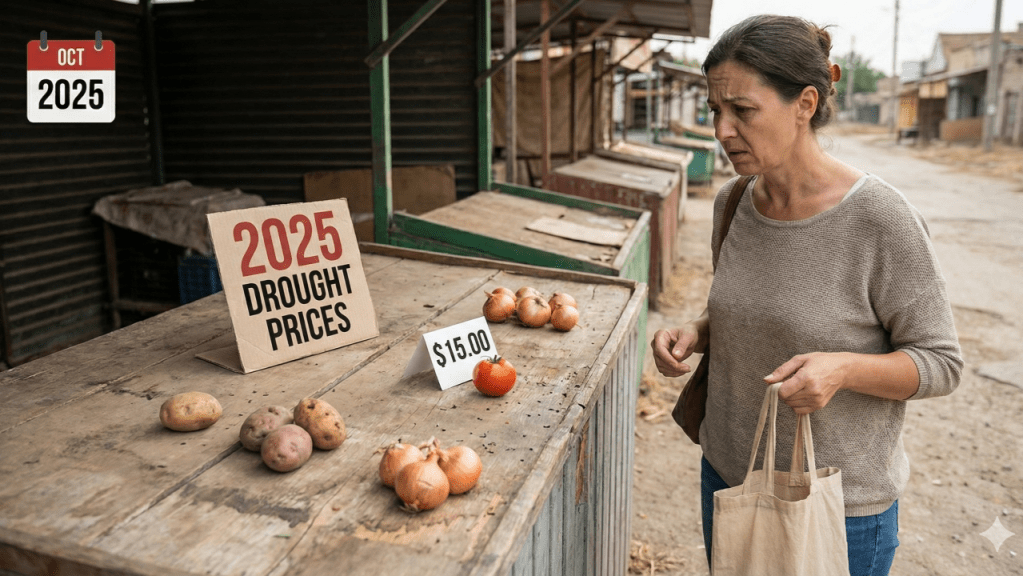
Ever noticed how food prices rise even before we sense the weather shifting? It makes you wonder: will climate change eat our harvests before we do?
The Science Behind Shrinking Harvests
Think of cooking rice: if the flame suddenly jumps too high, the grains go mushy outside and stay hard inside. Crops react the same way. When temperatures shoot beyond their comfort zone, especially during flowering, pollen fails, grains don’t fill well, and yields drop. Scientists call it heat-induced sterility, but it’s basically a crop losing its ability to reproduce.
How Unpredictable Rains Break the Farming Calendar
Imagine planning a trip months ahead only for the dates to shift overnight. Farmers feel that every season. Early monsoons flood fields; late monsoons delay sowing. Long dry gaps stress roots; sudden cloudbursts wash topsoil away. The calendar loses meaning when rainfall no longer follows a pattern and without timing, crops can’t grow to their full potential.
Soil Carbon: The Invisible Pillar of Yield
Healthy soil works like a sponge. It stores water, feeds microbes, and gives roots room to breathe. But when soil loses its organic carbon, it becomes tight, weak, and thirsty. A farmer might add fertilizer, but without carbon, the soil can’t hold nutrients. Climate-driven heat accelerates carbon loss, making soils degrade faster. It’s a silent crisis and the silent crises are the most dangerous.
What 2024 Data Shows About Crop Stress
NASA confirmed that 2023 was the hottest year ever recorded, with global temperatures 1.35°C above the 20th-century average. Extreme heat isn’t just uncomfortable it’s directly linked to falling yields. Wheat yields in India already showed up to 15% declines in heatwave years, a pattern also found in multiple ICAR studies.
The Growing Gap Between Food Demand and Food Reality
The world will need 60–70% more food by 2050, but climate stress is shrinking the very foundation of supply. From Africa’s maize belts to India’s rice bowl to Latin America’s soybean corridors, the warning signs look similar: unstable seasons, stressed soils, and crops pushed beyond their limits. If farming doesn’t adapt fast, food security could become the defining crisis of this century.
Your Quick Takeaways
- Heat spikes directly reduce grain formation, especially in wheat, rice, and maize.
- Unpredictable rainfall is now the biggest disruptor of sowing cycles and crop schedules.
- Soil carbon loss weakens yields, even when fertilizers are added.
- 2023–2024 climate data shows a sharp rise in crop-related losses, globally and in India.
- Climate-smart farming is no longer optional it’s central to future food security.
Something to Think About
If climate change is already nibbling at our harvests, how long until it bites into food security itself? The answer depends on how quickly we strengthen our soils, seeds, and systems before the seasons shift beyond repair.
