
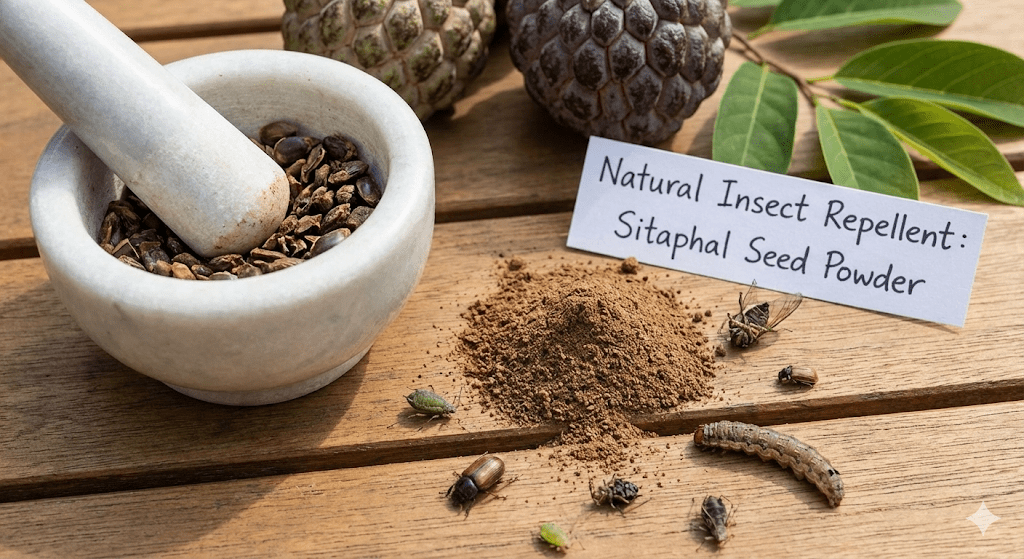
The Hidden Power Inside a Discarded Seed
Ever noticed how we throw away sitaphal seeds without a second thought? Those smooth black seeds look useless but they quietly carry the ability to repel insects, a trait nature built long before humans invented sprays.
A Personal Anecdote From the Classroom
In our Post Harvest Technology practical class, our sir gave each student an individual project linked to agriculture using real materials. My topic was sitaphal seed–based insect repellent. At first, it sounded simple. But the deeper I went, the more I realised these seeds weren’t just waste—they were a carefully designed natural defense system.
The Science Behind Sitaphal Seeds
Natural Defense, Not Magic
Sitaphal seeds contain acetogenins and alkaloids, compounds the plant produces to protect itself from insect attack. It’s similar to how bitter compounds warn us not to eat spoiled food insects sense this chemical signal and stay away.
How Insects Actually React
When seed powder or extracts come in contact with insects, these compounds interfere with their feeding behavior and basic nerve activity. The effect is slow and subtle. Instead of instant death, insects lose interest, movement reduces, and survival drops.
Why It Works Better as a Repellent
Sitaphal seed compounds are contact-based and biodegradable. That’s why they work best as repellents or early-stage pest management tools. Nature doesn’t aim for extermination it aims for balance.
Why This Matters for Sustainable Farming
Reducing Chemical Dependence
Most insect problems today are managed with repeated chemical sprays. Sitaphal seeds offer a low-cost, locally available alternative, especially useful in small farms and kitchen gardens.
Safe for Soil and Beneficial Life
Unlike synthetic insecticides, sitaphal seed-based preparations break down quickly and do not persist in soil. This protects earthworms, microbes, and natural predators that silently support crop health.
From Waste to Resource
What makes this more powerful is that sitaphal seeds are usually discarded. Turning them into repellents converts post-harvest waste into farm input, closing the loop farmers often overlook.
Key Takeaways You Should Remember
- Sitaphal seeds work as natural insect repellents, not harsh poisons
- Their effect comes from plant-made defensive compounds
- Best suited for early-stage pest control and repellency
- Safe for soil life and short-lived in the environment
- A smart example of waste becoming wisdom
A Thought That Fits Perfectly
Nature’s Quiet Intelligence
Rachel Carson once wrote, “In nature nothing exists alone.” Sitaphal seeds remind us that protection, nutrition, and balance are often packed together if we choose to notice.
Something to Sit With
What began as a classroom assignment slowly turned into a lesson in humility. Sometimes, sustainable solutions aren’t invented in labs they’re waiting in the seeds we throw away without thinking.
