
Below the soil surface, legumes are partnering with microbes in a way that quietly strengthens the entire farming system.
One of the most important partners is Rhizobium a bacterium capable of converting atmospheric nitrogen into a form plants can use. This biological partnership is one of the reasons legumes play such a valuable role in sustainable agriculture.
During a recent microbiology practical, we explored this relationship by isolating Rhizobium from fresh legume root nodules.
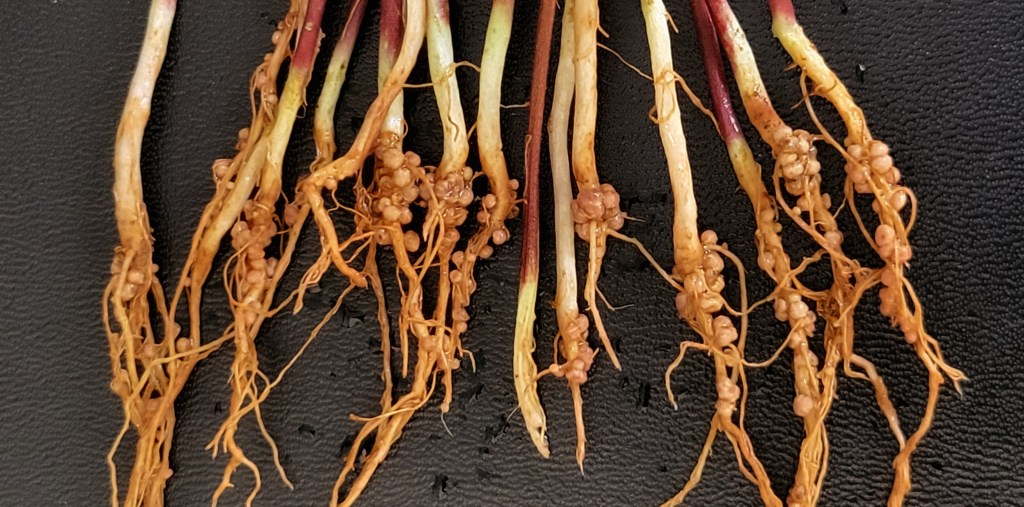
Starting With the Nodule
We collected nodulated legume plants from the student organic field. After carefully washing the roots to remove soil, healthy nodules were selected because active nodules usually indicate ongoing nitrogen fixation.
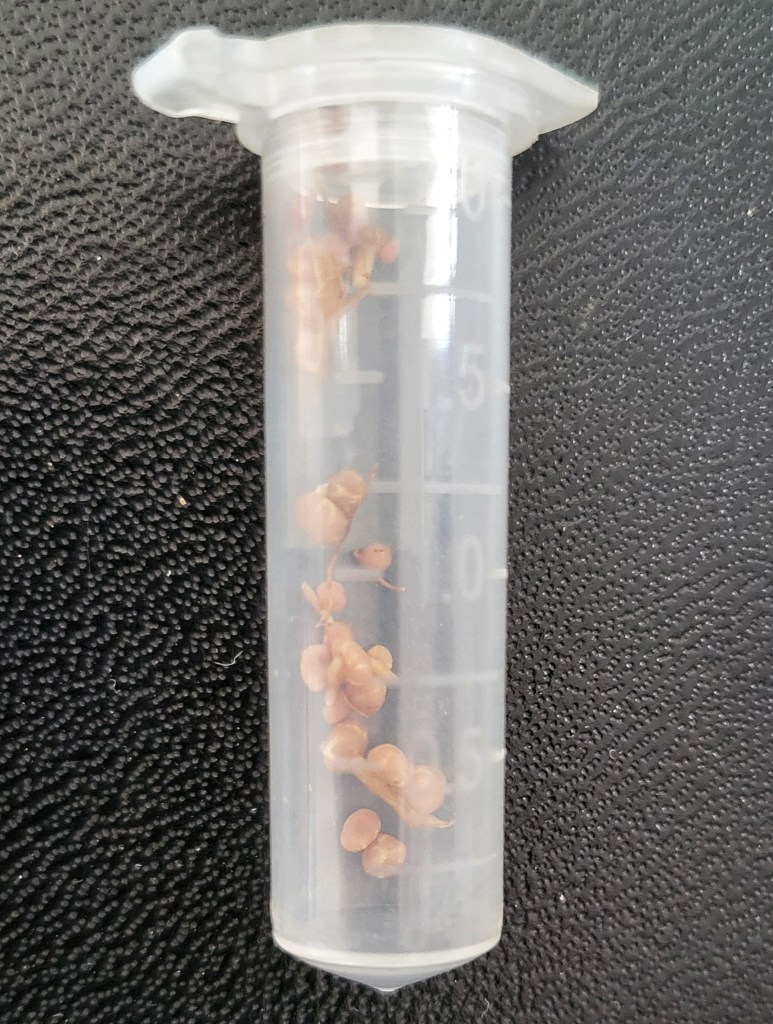
To ensure that only the bacteria inside the nodule were studied, the outer surface of the nodules was sterilized. The nodules were briefly treated with hydrogen peroxide and ethanol, followed by several rinses with sterile distilled water to remove any remaining chemicals.
Once sterilized, the nodules were crushed in sterile water to release the bacterial cells living inside.
Growing the Bacteria
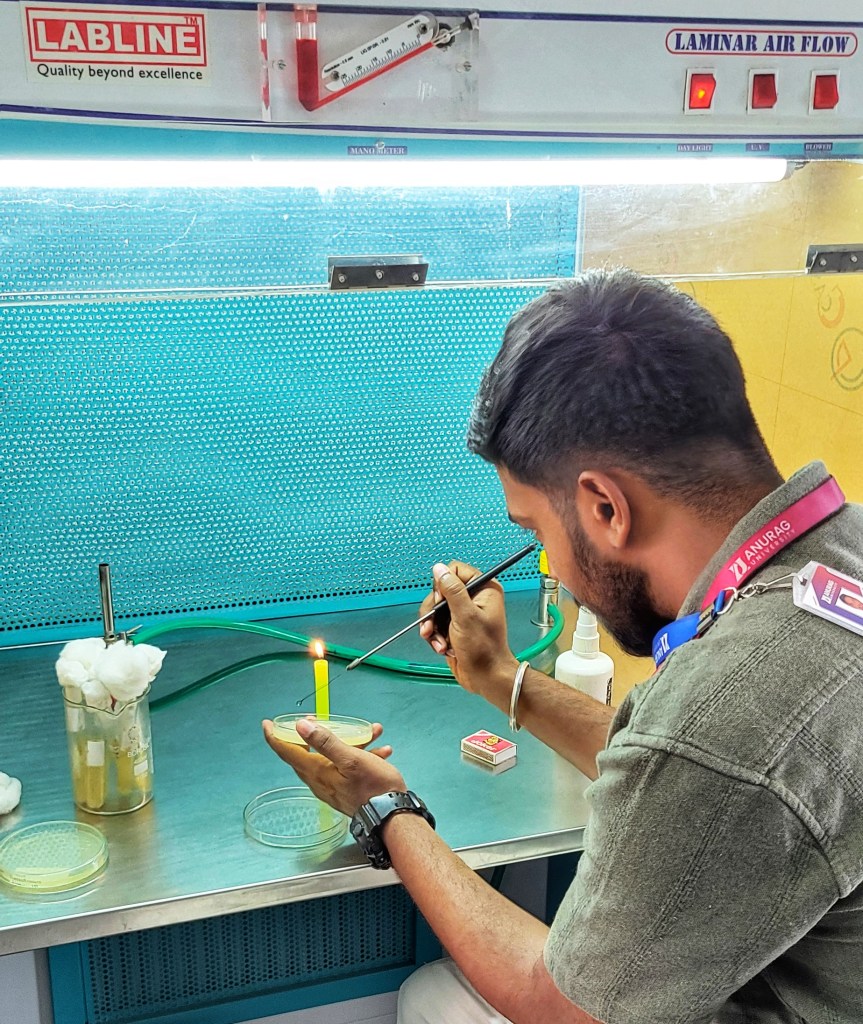
The suspension from the crushed nodules was inoculated onto a selective growth medium prepared for Rhizobium. After sterilization and plating, the Petri dishes were incubated at 30°C for about seven days.
Over time, smooth cream-white colonies began to appear on the plates. These colonies represent bacterial populations that originally lived inside the root nodules.
What Happens Inside the Root Nodule
Inside the root nodule, Rhizobium performs a remarkable function known as biological nitrogen fixation.
Using the enzyme nitrogenase, the bacteria convert atmospheric nitrogen (N₂) into ammonia (NH₃), which plants can absorb and use for growth. A special molecule called leghemoglobin helps regulate oxygen levels inside the nodule so that the nitrogen-fixing enzyme can function efficiently.
In this partnership, the plant supplies carbohydrates and a protected environment, while the bacteria supply nitrogen.
It is a biological exchange that supports plant growth without relying entirely on synthetic fertilizers.
Why Isolation Matters
The isolation of Rhizobium from nodules is not just a classroom exercise. It is actually the first step in biofertilizer production.
Once isolated, effective strains of the bacteria can be purified, multiplied in broth cultures, and mixed with carrier materials to produce inoculants that farmers apply to legume seeds. These inoculants help ensure that crops establish the right microbial partnerships in the soil.
Our practical covered only the initial stage isolating the bacteria from a healthy nodule.
But that first step is essential for developing microbial solutions that support sustainable farming.
The Agricultural Significance
Biological nitrogen fixation by legumes can contribute roughly 40 to 200 kilograms of nitrogen per hectare, depending on the crop and environmental conditions.
This natural process provides several benefits:
- Reduced dependence on synthetic nitrogen fertilizers.
- Lower production costs for farmers.
- Improved soil biological activity.
- Residual nitrogen for subsequent crops in rotation systems.
In many cropping systems, legumes act as natural nutrient builders within the soil. Studies summarized by the Food and Agriculture Organization (FAO) highlight that legume–Rhizobium symbiosis is one of the most efficient natural pathways for supplying nitrogen in agricultural ecosystems while reducing fertilizer demand.
A Climate Perspective
Nitrogen management is also closely connected to climate change.
Excessive use of nitrogen fertilizers contributes to emissions of nitrous oxide (N₂O), a greenhouse gas with a warming potential far higher than carbon dioxide. Agriculture is one of the major sources of these emissions, largely due to fertilizer use.
Biological nitrogen fixation offers a natural alternative pathway for supplying plant nutrients while reducing pressure on chemical inputs.
Seeing Soil as a Living System
Looking at bacterial colonies in a Petri plate may seem like a small laboratory exercise.
But it represents something much larger.
Each colony reflects a microscopic partnership that supports plant nutrition, soil fertility, and long-term agricultural sustainability.
When we begin to understand these microbial systems, soil stops being just a medium that holds nutrients. It becomes what it truly is a living ecosystem built on countless biological interactions.
The future of agriculture will not depend only on better fertilizers or larger machines. It will also depend on how well we understand the biological systems already working beneath our feet.
