
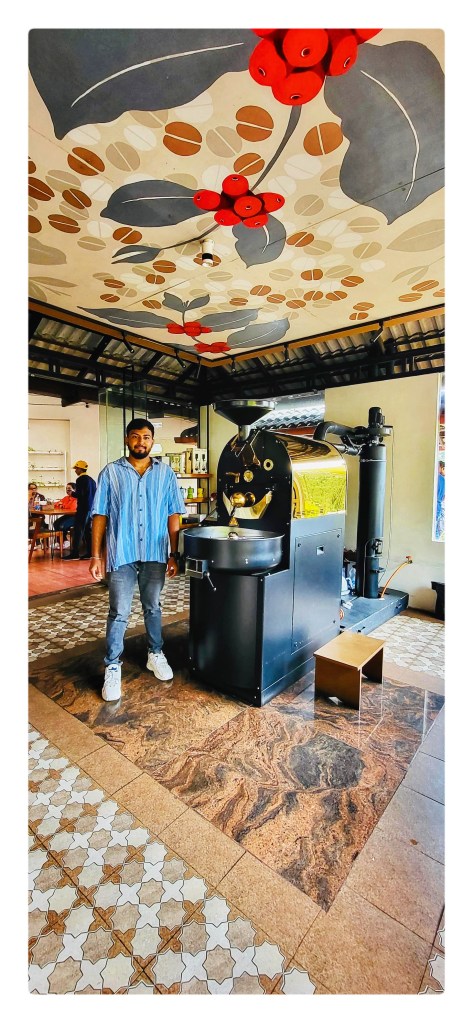
Once that question formed in my head, coffee stopped feeling like just a drink.
It started looking like a crop one with clear limits, dependencies, and risks.
Coffee Plant and Berries (Cherries)
Coffee grows on a perennial plant, and what we casually call coffee beans actually come from coffee berries, commonly known as cherries. These cherries are harvested only when they are properly ripe. Inside each cherry are the seeds that later become green coffee beans after processing.
As an agriculture student, this felt familiar. Yield and quality always begin at the plant, not at the machine.
Arabica vs Robusta (Only the Basics)
The two main types of coffee are Arabica and Robusta.
Arabica generally performs better at higher elevations with cooler temperatures, while Robusta is more tolerant to heat and stress. Both are grown in regions like Coorg and Chikmagalur, depending on local climate and terrain.
Different plants, different tolerances just like any other crop.
Shade, Climate, and Soil
Coffee is not comfortable with extremes.
It grows best under shade, often alongside trees, which ties it closely to forest-like systems.
- Climate influences flowering and fruit setting
- Soil health affects nutrient uptake and plant strength
- Shade helps regulate temperature and moisture
Because of this balance, coffee is highly sensitive to environmental changes. Even small shifts in rainfall or temperature can directly affect production.
Harvesting, Pulping, and Drying
Once ripe cherries are harvested, coffee needs to be processed quickly.
The basic steps include:
- Pulping — removing the outer skin
- Drying — reducing moisture to safe storage levels
This stage is critical. Even well-grown coffee can lose its quality if processing is poorly handled. That’s why processing matters more than most people realise it determines whether a farmer’s effort is protected or lost.
Roasting and Value Addition
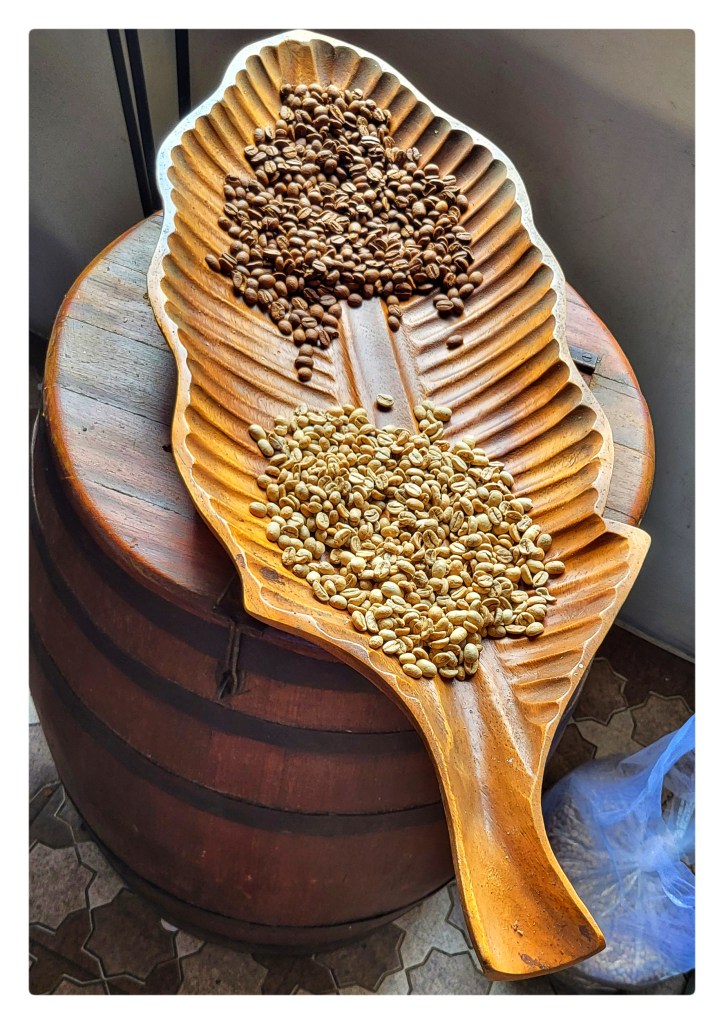
Roasting is where green coffee beans turn into the product we recognise. Through controlled heating, flavour, colour, and aroma develop.
This is where the difference between small roasters and bulk processing becomes clear. Small roasters work with tighter control and smaller batches, while bulk processing focuses on volume and uniformity. Both exist, but they serve very different purposes.
Why Cafés Matter to Farmers
Cafés that roast, package, and sell coffee are not just selling beverages. They act as the final link in the agricultural value chain.
When cafés source directly or transparently, they help narrow the distance between farmer and consumer. That connection can improve farmer visibility, value realisation, and consumer awareness of where coffee actually comes from.
Closing Thought
This experience made me realise something simple, but important.
Coffee doesn’t begin at the café.
It begins with a plant, shaped by soil, climate, shade, and careful processing.
As an agriculture student, that cup reminded me that farming is not just about growing crops it’s about protecting the chain that follows.
