
When the Leaves Looked Different
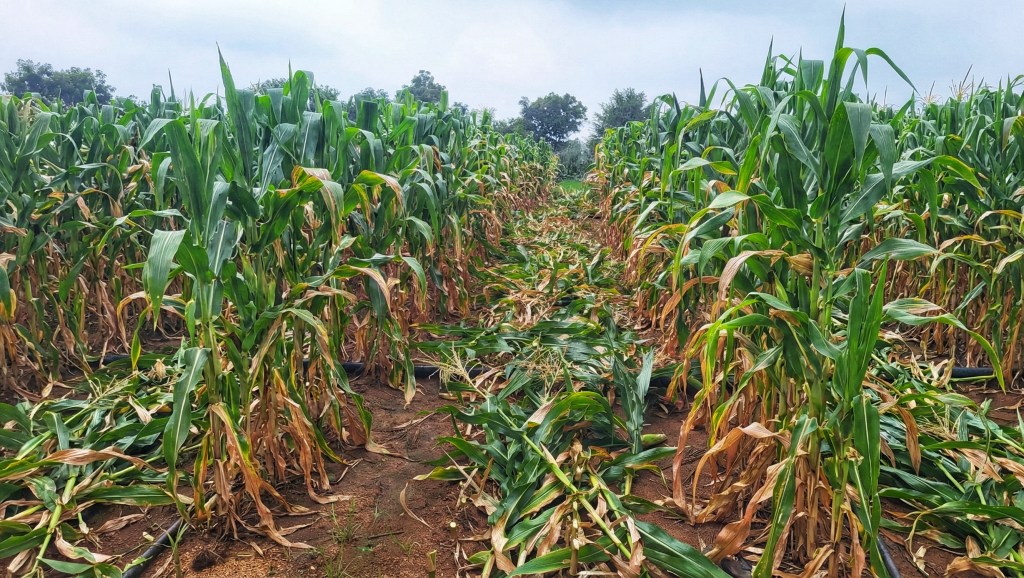
For a few days after the crop recovered from transplant shock, growth appeared normal again. Leaves regained colour, and the plants looked settled. There was no immediate sign that anything was about to change.
Then the leaves began to look different.
Small holes appeared first, irregular and scattered. At a glance, they looked minor. But closer inspection showed that the damage was not random.
Identifying the Problem
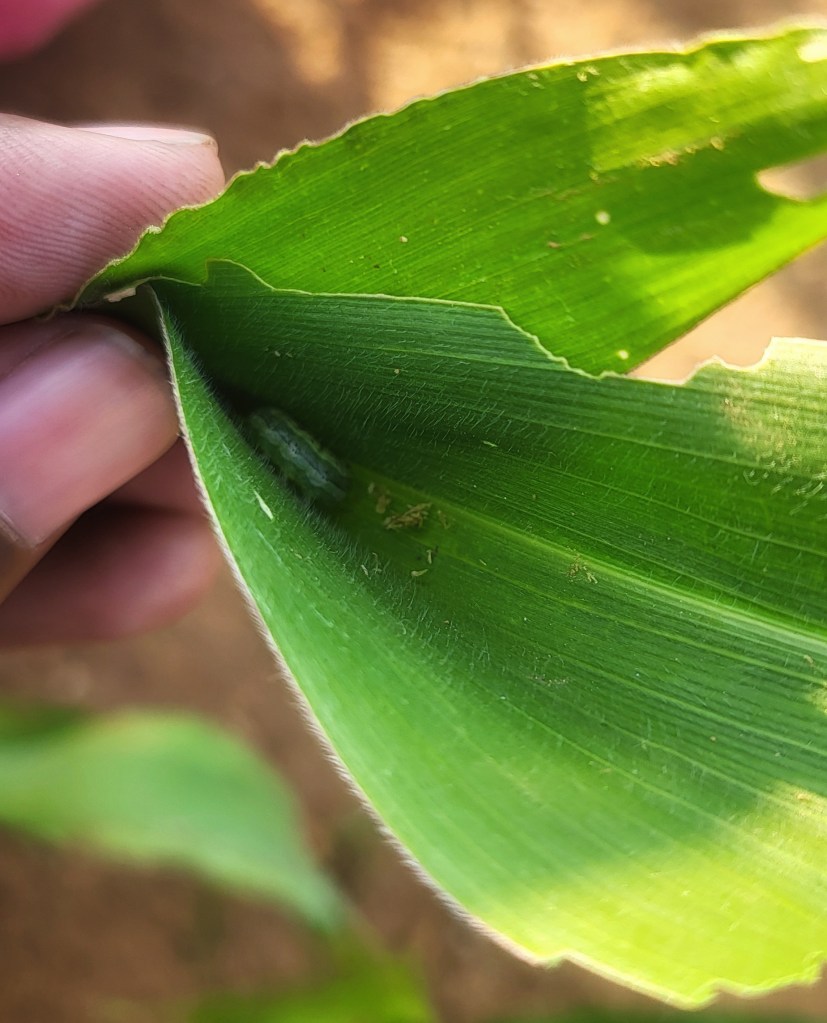
On 10 November, I checked the plants carefully and confirmed that the damage was caused by fall armyworm. The feeding was active, and the pattern was clear.
What stood out was not just the presence of the pest, but the speed at which it had spread. By the time the damage was fully visible, nearly 70% of the crop was already affected.
This was no longer a routine observation.
When Time Becomes the Limiting Factor
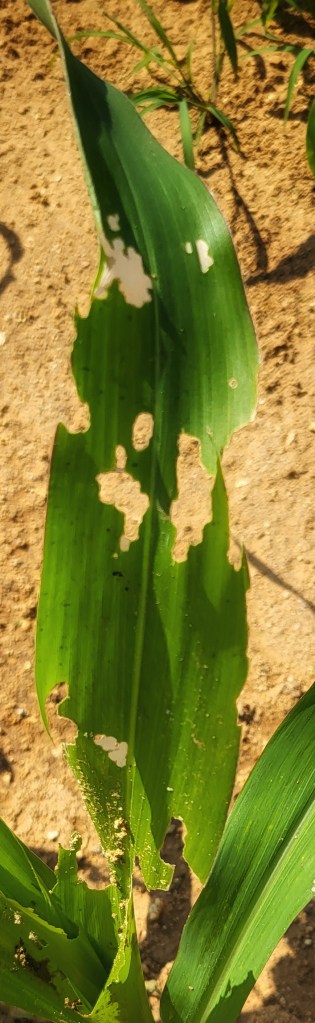
At this stage, the field stopped feeling manageable. The damage was progressing faster than observation cycles. Waiting was no longer neutral it meant losing more crop.
The issue was reported to the lecturer, and the response had to be immediate. There was little time to evaluate alternatives or experiment with responses.
The priority shifted from monitoring to containing loss.
The Intervention
To control the infestation, carbofuran granules were applied with the help of labourers. The application was focused on stopping further damage rather than correcting what had already been lost.
In the days that followed, the spread of fall armyworm came under control. New damage reduced, and the crop stabilised.
The immediate threat passed.
After the Pressure Eased
Once the infestation was managed, the field looked calmer again. The crop continued to grow, but it no longer felt the same as before. The damage remained visible, even as new leaves emerged.
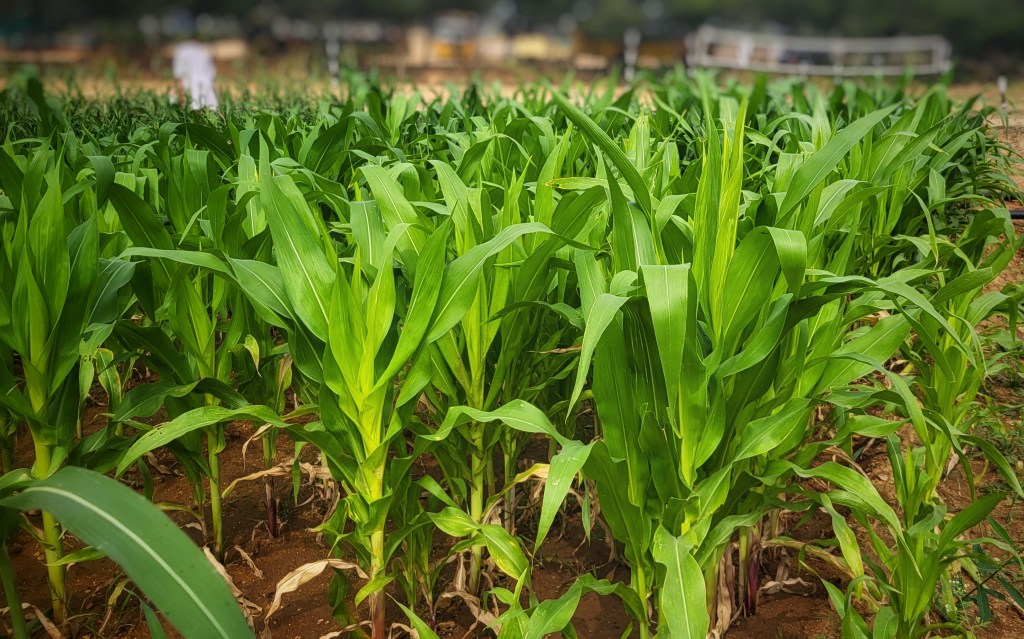
Something had shifted.
This phase marked the first time the crop demanded a response faster than planning. Decisions were no longer about optimisation they were about preventing collapse.
When the Rhythm Changed
After the pest was controlled, the crop continued to grow. On the surface, things looked stable again.
But something had shifted not in the field, but in how decisions had been forced.
The discomfort wasn’t about insects. It was about what happens to thinking when urgency enters the field.
The next part looks at how urgency changed everything.
