
How This Crop Began
This maize crop was grown as part of my 5th semester Practical Crop Production subject. The course has no theory component; learning happens entirely in the field. Each student is allotted a plot, a crop is assigned, and the work begins.
For this semester, I was allotted Maize.
Once the plot and crop were fixed, the task felt straightforward. The season had begun, the expectations were clear, and the focus was on managing the crop step by step.
Preparing the Field
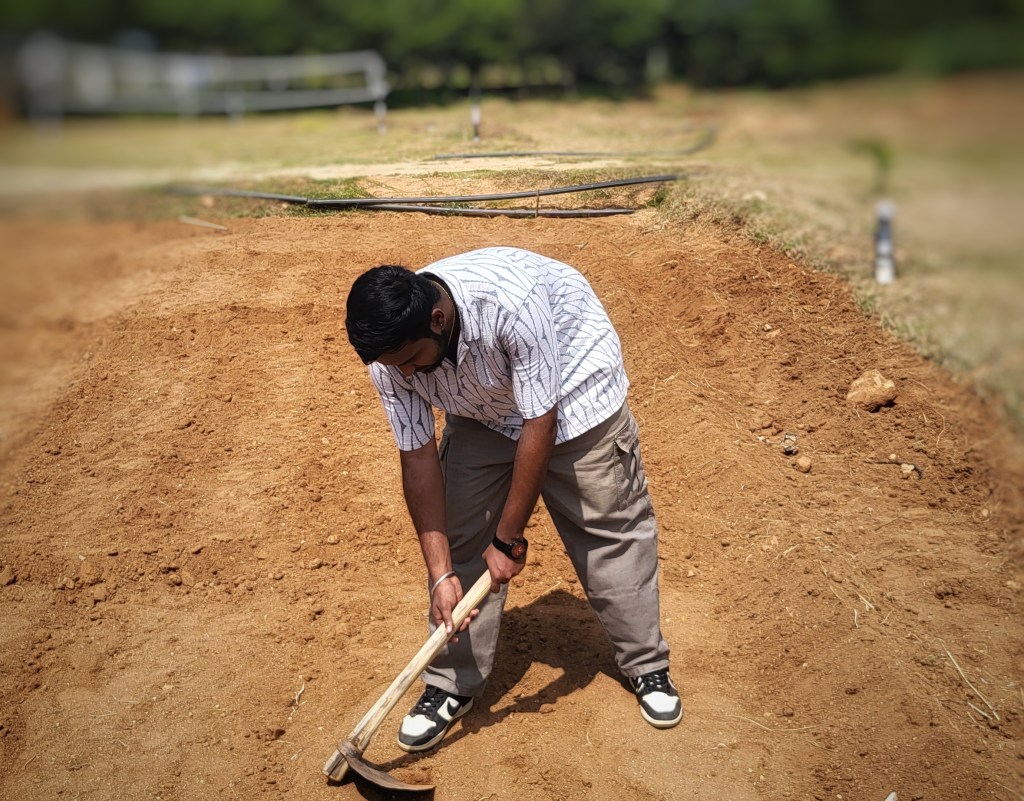
After allotment, I formed bunds around the plot to clearly mark the boundaries and help with water management. The field looked organised and ready for sowing.
At this stage, everything felt structured. There was a sense that if the steps were followed properly, the crop would progress smoothly.
Sowing the Crop
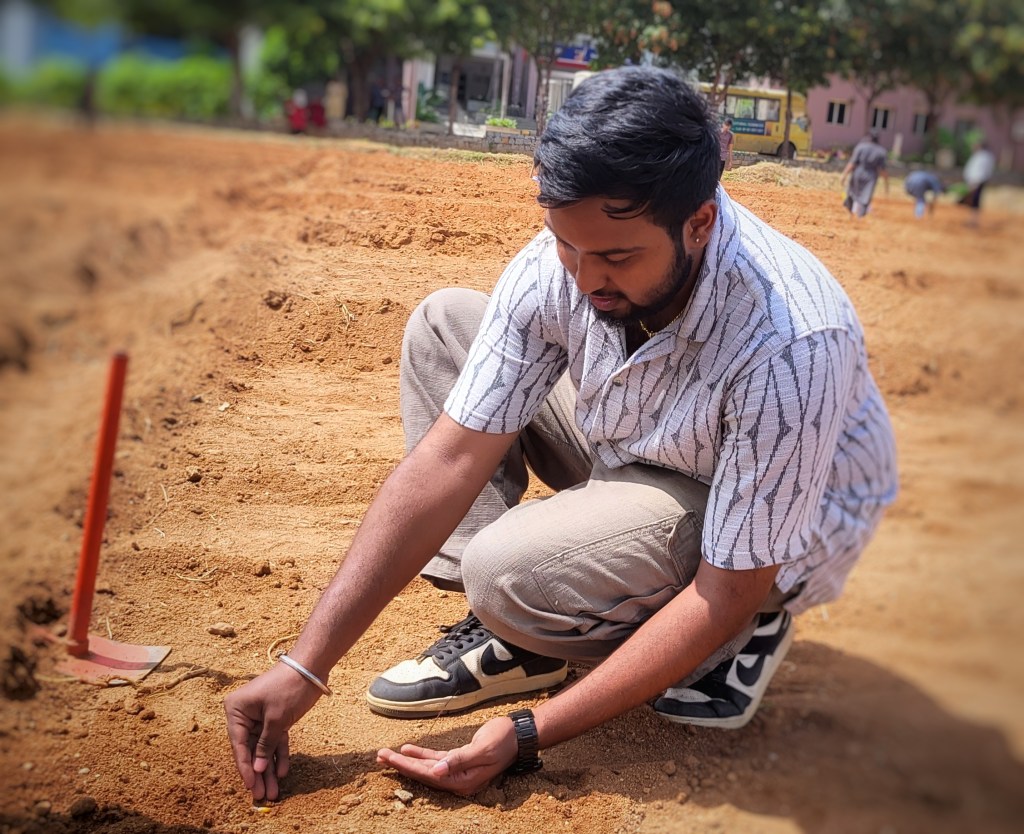
Sowing was done on 14 October 2025 using the maize variety Asiana 33–55.
I followed a spacing of 45 × 20 cm with a seed rate of 20 kg per hectare. Seeds were sown in lines, and sprinkler irrigation was given after sowing.
These practices were carried out as part of the practical schedule, and there was no immediate reason to question them.
Early Emergence
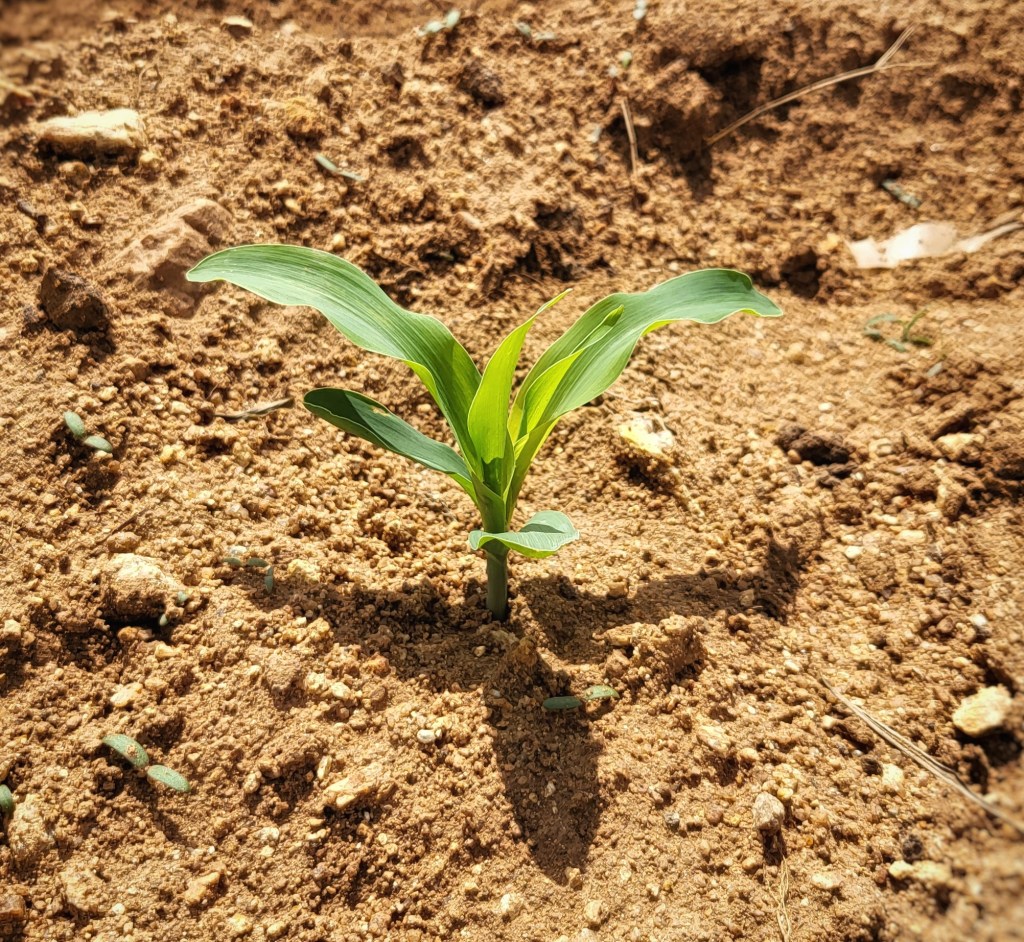
After about 8 days, seedlings began to emerge. The plants were small but uniform, and establishment appeared normal.
At this point, the crop looked settled. Growth was slow but steady, and there were no visible signs of stress.
First Nutrient Application and Thinning

On 25 October, around ten days after sowing, urea and SSP were applied beside the plants at a depth of about 5 cm.
On 28 October, thinning was carried out. Where more than one plant was present, extra seedlings were removed and placed on the bunds so that the remaining plants could grow with adequate space and nutrients.
These operations felt routine and necessary for supporting early crop growth.
An Unexpected Response
Two days after thinning, on 30 October, the crop showed visible stress. The leaves wilted and appeared dull, indicating transplantation shock.
For a few days, growth slowed and the plants looked weak. By 7 November, the crop gradually recovered and returned to normal growth.
Before Things Changed
Up to this point, the maize crop had not faced any major challenge. Growth was manageable, operations followed the plan, and decisions felt safe.
The field looked predictable.
The next part begins when everything that worked until now, managed the same way, starts behaving very differently.
