
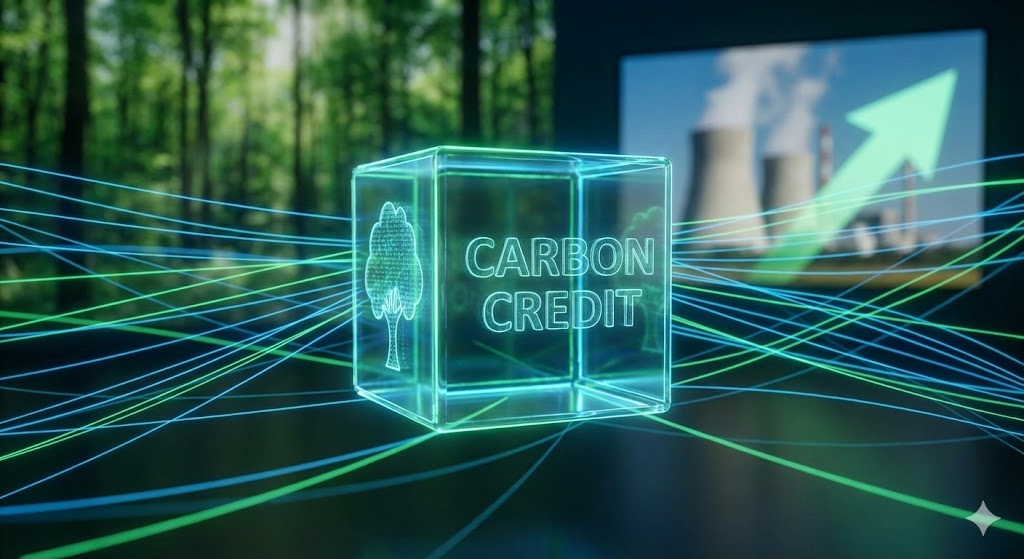
Ever thought the soil under a farmer’s feet could be worth more than the crop growing on it? Turns out, carbon might become the newest cash crop if we learn how to store it right.
A Small Moment in a Digital Classroom
I first discovered carbon credits while taking a LinkedIn ESG course. The instructor mentioned how farmers could earn money simply by storing carbon in their soil. That one line stayed with me long enough for this blog to begin forming in my mind.
What Soil Carbon Really Means
Soil isn’t just dust and dirt it’s a natural carbon bank. When plants grow, they pull carbon from the air and send some of it down into the soil through their roots. Think of it like quietly depositing savings every day without even noticing.
How Carbon Gets Locked in the Soil
Plants breathe in carbon dioxide, use what they need, and pass the rest underground. Roots, crop residues, compost, and even cow dung help soil store more carbon. It’s a lot like slow cooking steady heat, steady flavor. The slower carbon enters and stays, the richer the soil becomes.
Why Small Farmers Are Perfectly Positioned
Small farmers often care for every patch of their field closely. Many also follow mixed cropping, natural inputs, and low-tillage methods all of which help soil store more carbon. In other words, they’re already halfway into carbon farming without even calling it that.
What 2024 Climate Data Shows in Simple Terms
2023 was officially the hottest year NASA has ever recorded, with temperatures roughly 1.35°C hotter than normal. That extra heat dries out soil faster and reduces the organic matter it needs to hold carbon.
NOAA also estimates farmers worldwide lost more than $25 billion worth of crops in 2023 because of droughts, floods, and extreme heat. When crops suffer, soils lose the plant material that becomes carbon.
Why Soil Carbon Matters More Than We Think
Healthy soil can store nearly three times more carbon than the air around us but only if we protect it. India already has nearly 30% of its farmland degraded, and weak soils store less carbon. Scientists warn that if soils continue to degrade, India could lose billions of tonnes of stored carbon in the coming decades.
Where Carbon Credits Fit In
Carbon markets are growing fast. Companies want to offset their emissions by buying carbon credits from farmers who can prove they’re storing more carbon than before. It’s simple:
better soil = more carbon stored = more credits earned.
Your Quick Takeaways
- Soil acts like a natural carbon bank richer soils store more carbon.
- Simple practices like composting, cover crops, and minimal tillage help lock carbon in.
- Carbon credits turn climate-friendly farming into income for small farmers.
- Climate change is making soil weaker, so carbon farming is now a necessity.
- Healthy soils improve yields, reduce fertilizer costs, and build long-term resilience.
Something to Think About
Carbon farming shows us a quiet truth: the soil beneath small farmers holds more potential than we ever imagined. The real question is whether we treat it as a passing trend or as a turning point for farming, climate resilience, and farmer incomes.
