
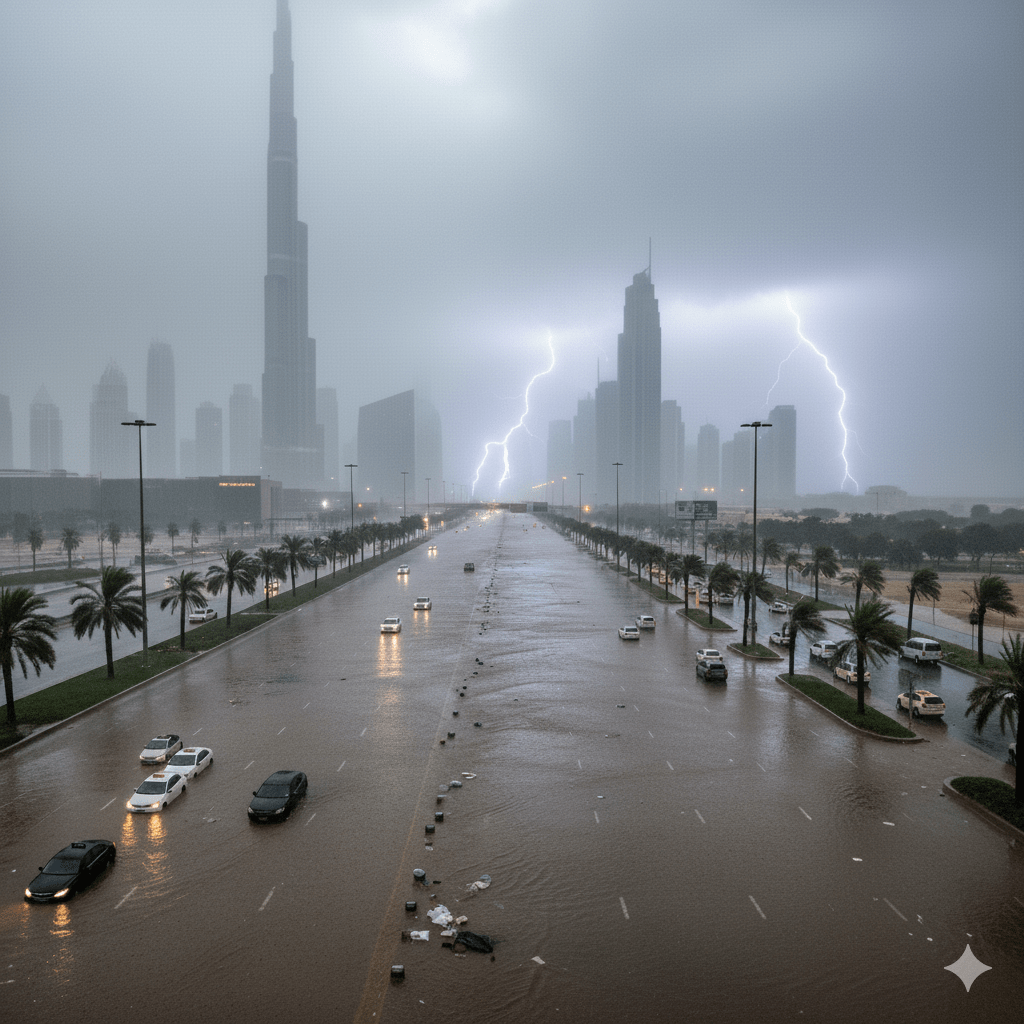
Why the Rainfall in Dubai Is Being Talked About
Dubai recently received rainfall far beyond what the region usually experiences. Roads flooded, transport slowed, and daily routines were disrupted. For many people, the first reaction was surprise. A desert city under water felt unexpected.
But this was not just an unusual weather moment. It raised a larger question about how rainfall patterns are changing and why such events are being seen in places where they were once rare.
Why This Didn’t Feel Normal
Dubai is built for dry conditions. Rain is usually short, light, and infrequent. When large amounts of water fall in a short time, the city struggles to absorb it. Drainage systems, roads, and buildings are simply not designed for this kind of rainfall.
So the disruption was not only because it rained, but because it rained all at once.
What Actually Caused Such Heavy Rain
Warmer air can hold more moisture. As global temperatures rise, the atmosphere has more water available to release as rain. When weather systems trigger rainfall, that stored moisture can come down quickly and intensely.
This does not mean it will rain more days every year. It means that when rain does occur, it is more likely to be heavy and sudden.
Why Desert Regions Are Not Immune
There is a common belief that deserts will only become drier with climate change. In reality, many dry regions are experiencing more uneven rainfall. Long dry periods are followed by short, intense rain events.
This pattern increases flooding risk while still failing to solve water scarcity. Most of the rain runs off instead of entering the soil or recharging groundwater.
How Urban Areas Make It Worse
Cities like Dubai have large paved surfaces roads, buildings, parking areas. These surfaces prevent water from soaking into the ground. When heavy rain falls, water has nowhere to go except across streets and into low-lying areas.
So even if the total rainfall amount does not seem extreme on paper, the way it falls and the way the city is built make the impact much stronger.
What This Means Beyond Dubai
This event is not important only because it happened in Dubai. Similar patterns are being seen in many parts of the world. Cities are facing rainfall they were never planned for. Infrastructure built on old climate assumptions is being tested.
The lesson is not about blaming weather. It is about recognising that past patterns are no longer reliable guides for future planning.
Why Climate Change Is Central to This Conversation
Climate change does not always show up as slow, visible damage. Sometimes it appears as sudden stress rain where it was rare, heat where it was manageable, floods where they were unlikely.
Events like the Dubai rainfall remind us that climate change reshapes how weather behaves, not just how warm or cold it gets.
What Gets Overlooked in These Discussions
Most conversations focus on whether such rain is “natural” or “man-made.” This misses the point. The more important issue is preparedness. Are cities, systems, and policies adjusting fast enough to these changing patterns?
Weather events pass quickly. Their impacts stay longer.
Why This Matters for the Future
As rainfall becomes more uneven, both dry and wet regions face higher risk. Flooding, water stress, and infrastructure damage can happen in the same place, sometimes in the same year.
Understanding these changes early helps reduce future losses. Ignoring them makes recovery more expensive and more difficult.
The Core Takeaway
The rainfall in Dubai was not just about a desert getting rain. It was about how climate change is reshaping rainfall behaviour in ways that challenge existing systems.
The real question is no longer whether such events will happen again, but how prepared we are when they do.
