
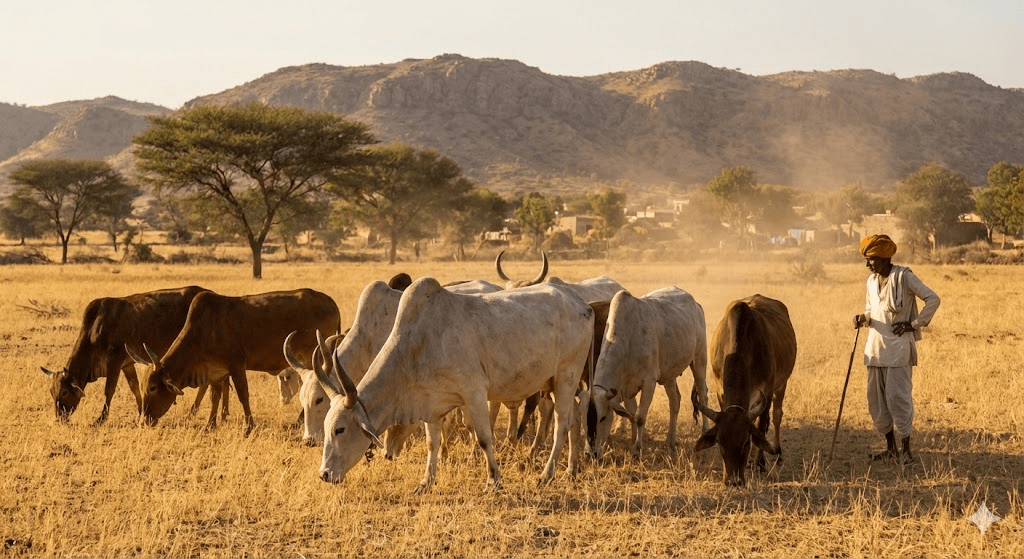
On the surface, pastures look simple grass, cattle, and open fields. But underneath, they act like living systems that either store carbon or slowly release it back into the air. How we manage them shapes both soil health and climate outcomes.
Why Pastures Matter More Than We Think
Across India and many other regions, grazing land is often unmanaged. Animals roam freely, fields get overgrazed, and soil slowly loses the ability to hold carbon. Most of this happens quietly, without drawing attention. But the condition of pastures decides how much carbon remains underground, how healthy livestock remain, and how resilient farming landscapes can be under a warming climate.
Healthy Grasses as Carbon Engines
When grasses photosynthesize, they pull carbon dioxide from the air and push a portion deep into the soil. Strong root systems lock this carbon in place, allowing soil to build organic matter year after year.
When Degradation Starts
Overgrazing strips vegetation, exposes soil, and speeds up carbon loss. Without ground cover, soil heats faster, dries quicker, and becomes vulnerable to erosion. Instead of acting as carbon sinks, degraded pastures gradually become carbon sources.
The Livestock Connection
Livestock naturally produce methane but the quality of pasture influences how much. Nutritious forage improves digestion, reducing methane intensity. Dry, fibrous, nutrient-poor grasses do the opposite.
Simple Improvements That Change Everything
Rotational grazing, silvopasture, and integrating legumes can regenerate pastures without heavy costs. Allowing land to rest improves root development and soil cover. Trees provide shade, reduce heat stress, and improve microclimates. Legumes naturally add nitrogen, improving both grass growth and animal nutrition.
Heat Stress on Grasses
NASA confirms 2023 and 2024 as two of the hottest years ever recorded, with global temperatures roughly 1.2–1.4°C above pre-industrial levels. This heat lowers pasture protein levels and accelerates maturity, reducing nutritional value for livestock.
Rainfall Becoming Unpredictable
NOAA data from 2023–2025 shows highly erratic rainfall patterns across Asia. Drought weakens root systems, while heavy rain events strip away topsoil and dilute nutrients. Pastures that once held carbon reliably now face higher vulnerability to erosion and degradation.
Methane Trends Rising
NOAA’s atmospheric records show methane concentrations reaching new highs in 2023 and 2024. In regions with unmanaged open grazing, animals feeding on poor-quality forage contribute to higher methane emissions per unit of milk or meat. India’s large free-grazing livestock population makes managing pasture quality even more important for reducing climate impact.
Key Takeaways
- Healthy pastures store carbon; degraded ones leak it.
- Better forage quality reduces methane intensity from livestock.
- Heat and erratic rainfall are weakening grasslands across India.
- Rotational grazing, silvopasture, and legumes improve soil health naturally.
- Pasture management is a silent but powerful form of climate action.
A Line That Fits This Landscape
Allan Savory once said, “The soil is the great connector of lives.”
Closing Reflection
A grazing field may look calm, but it is constantly shaping what happens in the soil below. When pastures thrive, carbon stays underground, livestock stay healthier, and farming landscapes become more resilient. When they degrade, carbon escapes, methane rises, and soils weaken. Managing pastures wisely isn’t a modern invention it’s simply paying attention to the land that feeds both animals and climate stability.
