
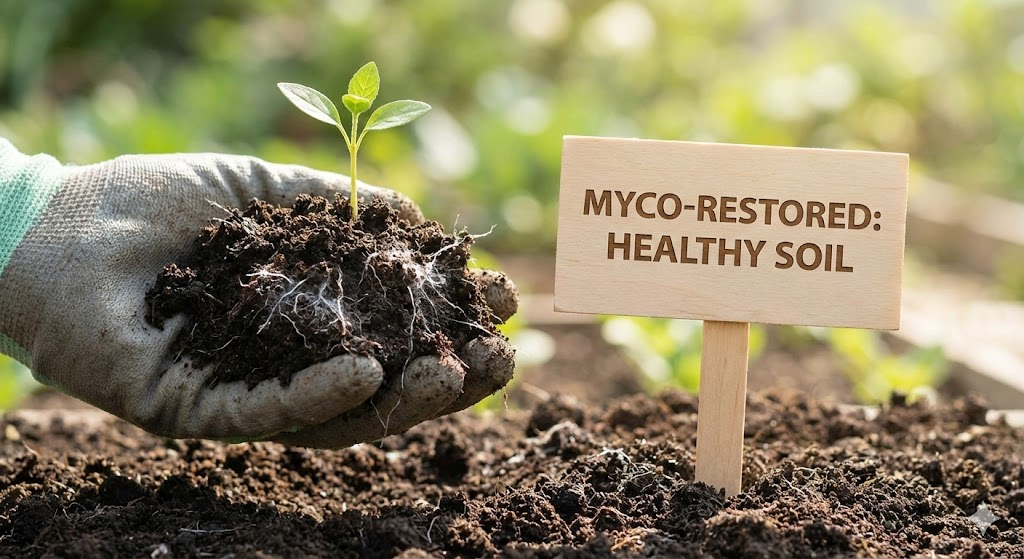
Soil often looks silent on the surface, especially when it cracks under heat or turns pale from overuse. But the moment rain arrives and life begins to return, something subtle is at work beneath the top layer. Not roots. Not fertilizers.
It’s fungi weaving through the soil like delicate threads, quietly repairing what has been damaged.
How Fungi Help Damaged Soils Recover
Across many farming regions, soil pollution doesn’t reveal itself through dramatic signs. There’s no smoke or smell. Instead, it slowly appears as shrinking yields, poor water holding, weak roots, and compacted land. Years of heavy chemicals, industrial waste, and eroded organic matter leave soils tired.
This is where fungi step in.
Their underground network the mycelium spreads through the soil like a soft web, touching each particle gently. This network absorbs, breaks down, or locks away harmful substances so the soil can heal at its own pace. Instead of forcing change, fungi guide it silently.
Mycoremediation simply uses this natural ability.
Fungi send out enzymes that break complex pollutants into simpler, safer forms. Some species can even bind heavy metals, holding them in place so they don’t enter food crops. It’s similar to how soap breaks down grease only here, the cleaners are microscopic and tireless.
Over time, the soil softens, darkens, and becomes crumbly again. Mycelium improves structure, opens up tiny air channels, and helps soil hold more moisture. The land starts breathing again.
Why Fungi Matter Even More in Today’s Climate
The last few years have shown a clear trend: hotter days, longer dry spells, and sudden heavy rains.
NASA reported that 2023 was the warmest year ever recorded, and temperatures continue to rise. When soils heat up, pollutants move faster, spreading deeper and making contamination harder to control.
Climate assessments from 2024 also highlight more intense rainfall in many Asian regions. These downpours push pesticides, fertilizers, and metals further into the soil before microbes can neutralize them. Degraded soils struggle the most they erode quickly, drain poorly, and lose what little organic matter they have left.
This is where the fungal network becomes invaluable.
Unlike many organisms, fungi continue to function even under stress. They tolerate heat better, retain moisture around roots, and stabilize fragile soil. In lands where climate extremes hit hardest, mycelium acts like stitching on torn fabric holding everything together until the soil can rebuild.
A Few Simple Things to Remember
- Fungi help detoxify polluted soils naturally and quietly.
- Mycelium improves water retention, aeration, and structure in damaged soils.
- Climate change is accelerating soil degradation, making fungal support more important.
- Mycoremediation is affordable and fits well into low-input farming systems.
- Strong fungal networks support healthier crops without relying on heavy chemicals.
A Line of Wisdom That Fits Here
Paul Stamets once said, “Fungi are the foundation of life on Earth.”
A Quiet Closing Thought
If fungi can rebuild the ground under our feet, slowly and patiently, then the path to restoring damaged soils may be closer than we think. Every thread of mycelium reminds us that healing doesn’t always require force sometimes, it begins with something small, steady, and quietly persistent.
