
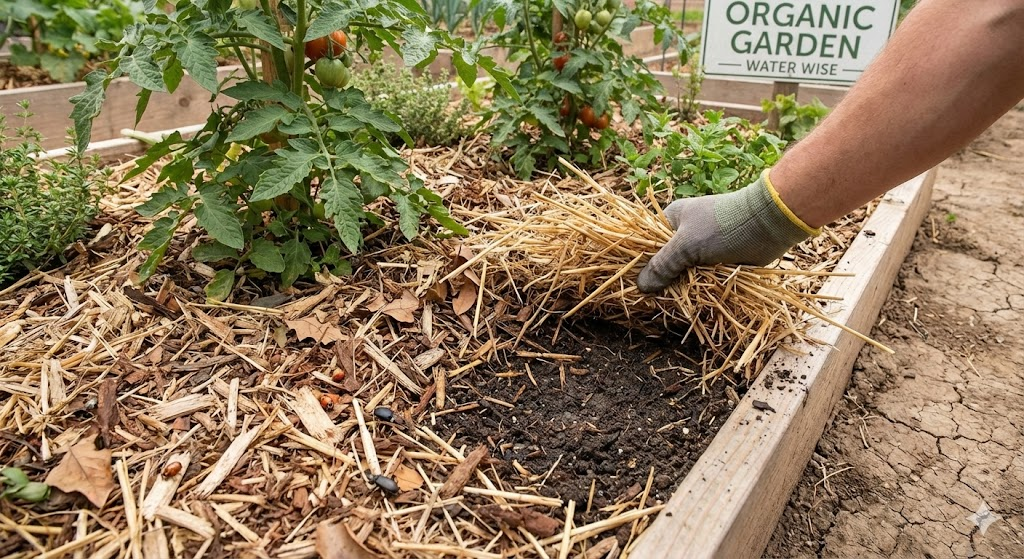
Ever noticed how a simple cover of leaves or straw can make a field feel cooler and calmer? That thin layer does far more work beneath the soil than we usually think.
Why Mulch Is More Powerful Than It Looks
Plant-based mulches may look like just dry residues, but they quietly shape how soil holds water, how weeds grow, and how insects behave. With rising temperatures and uneven rainfall becoming common in many regions in recent years, farmers need simple practices that protect the soil without increasing costs. Mulching is one of them.
How Mulch Helps the Soil Hold Water
Organic mulches like straw, leaves, or crop residues act like shade for the soil. When the soil is bare, the sun pulls moisture out quickly. When covered, moisture stays longer.
Studies in the last few years show a clear pattern: mulched soil loses far less water during hot days compared to uncovered soil. Even during short dry spells, mulched fields hold on to enough moisture for roots to stay active.
Mulch as a Natural Pest Manager
Mulch blocks sunlight from reaching weed seeds, making it harder for them to sprout. At the same time, it creates a cool, slightly moist layer that supports beneficial insects tiny predators that naturally keep harmful pests under control.
It’s the same balance you see in forests, where the soil is always covered and pest outbreaks are rare.
Why Mulching Matters More in Today’s Climate
Recent climate reports (2023–2024) show that many regions across Asia and other parts of the world are experiencing hotter days and longer dry periods than before. Warmer air dries soil faster, and sudden heavy rains wash away the top layer.
Mulching helps buffer these changes. Covered soil stays cooler, dries slower, and holds its structure better during heavy rain. Even in heatwaves, mulched fields often show less visible stress on plants because the soil underneath stays moist and steady.
Quick Takeaways You Can Use
- Mulching slows water loss and reduces the need for frequent irrigation.
- Covered soil stays cooler and healthier during hot spells.
- Mulch suppresses weeds naturally by blocking sunlight.
- Beneficial insects thrive under mulch, helping control pests.
- It is affordable, simple, and fits perfectly into climate-resilient farming.
A Thought That Grounds This Idea
Rachel Carson once said, “In nature, nothing exists alone.” Mulching reminds us of that truth soil, microbes, insects, moisture, and plants all support one another. A simple layer of plant residue strengthens these connections.
A Question to Leave You
If a thin layer of mulch can protect soil, save water, and reduce pests, what other simple, nature-based practices might be waiting to reshape our farms? Sometimes the smallest changes make the biggest difference.
