
Ever noticed how stepping under a tree on a scorching day feels cooler than standing beside an air conditioner? Turns out, nature has been running the best cooling system long before we invented machines.
The Day Bangalore Surprised Me
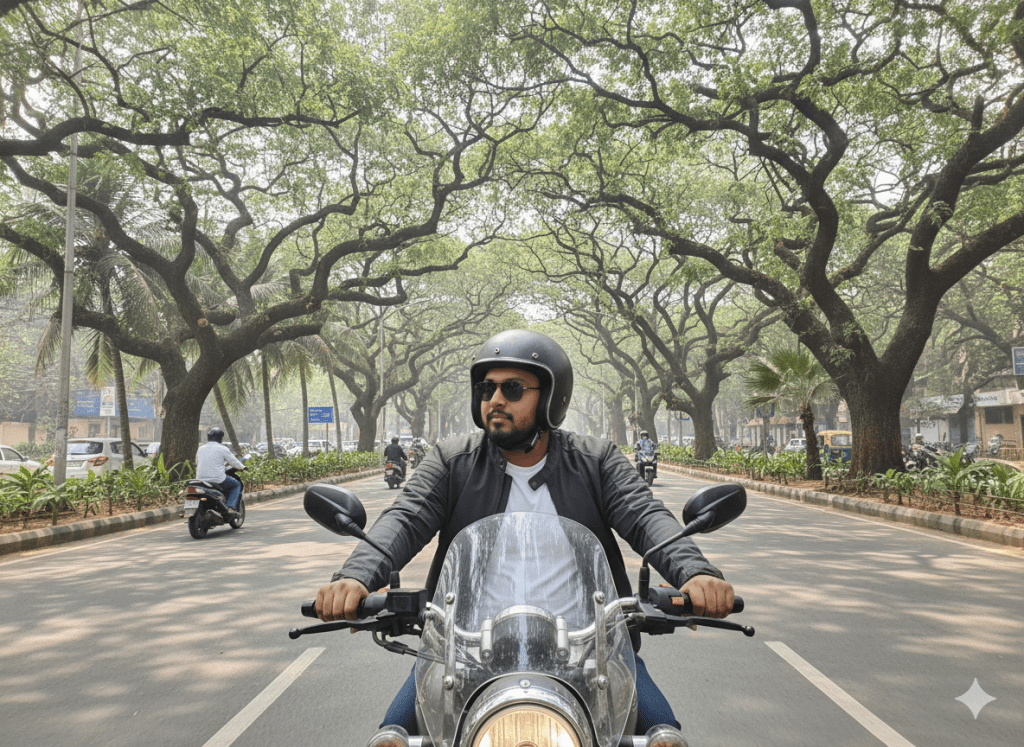
A few months ago, I was riding a motorcycle through Indiranagar and other busy stretches of Bangalore. I braced myself for the usual city combo traffic jams, heat, and sticky humidity. The traffic part? Oh yes, Bangalore delivered. But the heat? That’s where things got weird. Instead of sweating like I usually do in Hyderabad, I actually felt cooler. Even in the middle of all that honking and idling engines, the air wasn’t heavy it was surprisingly pleasant.
Curious, I started noticing my surroundings more closely. Almost every road was lined with tall trees huge canopies of gulmohar, neem, and rain trees arching over the streets. And here’s what struck me most: the city hadn’t chopped them down to widen roads. Instead, they gave the trees space to grow. Riding under those green tunnels, I realized the shade wasn’t just beautiful it was literally keeping the city breathable.
The Science Behind Urban Cooling
How Trees Beat the Heat
Trees act like giant umbrellas, blocking direct sunlight and keeping the ground from heating up like a frying pan. But there’s another trick they “sweat.” Through a process called transpiration, trees release water vapor into the air. It’s like nature’s version of an evaporative cooler. The result? Streets under tree cover can feel 2–8°C cooler than open asphalt. That’s a massive difference when you’re stuck in traffic on a summer afternoon.
ACs vs. Trees:
Air conditioners feel like magic indoors, but step outside near one and you’ll notice the hot blast from its vents. That’s because ACs don’t eliminate heat they just push it outdoors. Multiply that by thousands of units across a city, and you get the urban heat island effect where cities can be 5–7°C hotter than nearby rural areas. Trees, on the other hand, cool both indoors and outdoors. Shaded homes can cut indoor temperatures by up to 30%, reducing AC demand dramatically.
The Hidden Bonus:
A single large tree can release over 400 liters of water into the air on a hot day, acting like a natural misting system. Trees also filter air pollution, reduce noise, and absorb carbon dioxide. Some studies suggest that strategically planted urban trees can lower local energy demand for cooling by 20–50%. In short, trees aren’t just green they’re powerful, living infrastructure.
Quick Takeaways
- Trees lower city temperatures by 2–8°C, while ACs only cool indoors.
- Air conditioners push heat outdoors, adding to the urban heat island effect (cities often 5–7°C hotter than nearby rural areas).
- Shaded homes can be up to 30% cooler, cutting electricity bills and AC use.
- A single large tree releases 400+ liters of water daily through transpiration, acting like a natural misting system.
- Planting native urban trees is a low-cost, long-term solution that keeps cities livable and reduces energy demand.
Final Thoughts
Maybe the real air conditioners our cities need aren’t plugged into walls at all they’re rooted in the ground. Every tree we protect or plant isn’t just shade; it’s a quiet promise of cooler streets, cleaner air, and a city that breathes easier.
