
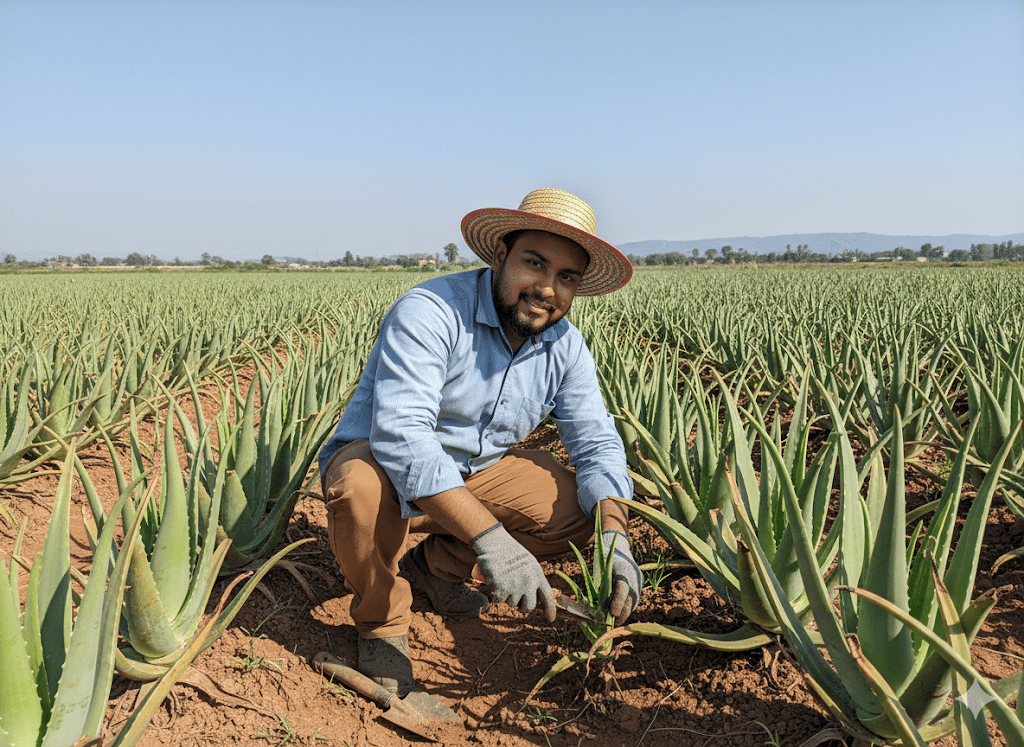
If you had to name one plant that could survive in a wasteland with blazing sun, cracked soil, and barely a drop of water aloe vera would be it.
It doesn’t just survive harsh conditions. It thrives in them.
That’s partly because aloe vera belongs to a unique group of plants known as CAM plants short for Crassulacean Acid Metabolism. It sounds like something from a biotechnology textbook, but the logic behind it is actually quite clever.
Here’s the trick:
- Most plants open their stomata (pores) during the day to take in carbon dioxide for photosynthesis.
- But this also means they lose water rapidly through transpiration especially in hot, dry climates.
- Aloe vera does the opposite. It opens its stomata at night, when the air is cooler and more humid.
By flipping the schedule like this, aloe vera can keep its water locked in during the daytime heat, while still absorbing carbon dioxide efficiently at night.
This nocturnal lifestyle allows aloe to survive in places where most crops would wither and die. No rainfall for weeks? No problem. Rocky soil with barely any nutrients? Still good. It doesn’t flinch.
In fact, aloe vera asks for almost nothing:
- No irrigation systems
- No chemical fertilizers
- No pesticide sprays
- No tilling, trenching, or constant care
It’s practically a self-sustaining plant, running its own silent operation in the background capturing carbon, cooling the soil, and staying green when everything else turns brown.
And that’s where its real climate superpower begins.
Because while most solutions to climate change require massive investment solar panels, wind turbines, big policy reforms aloe vera reminds us that sometimes, the smallest, most overlooked things can offer the smartest solutions.
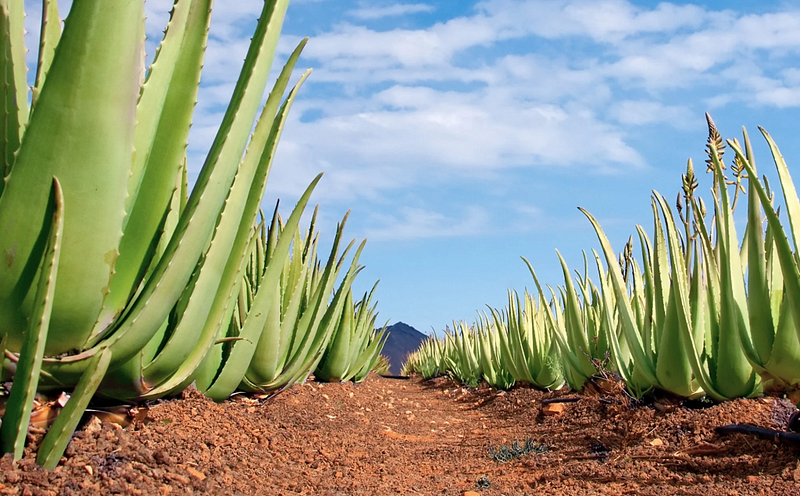
How Aloe Vera Helps Fight Climate Change
Here’s the big idea: plants absorb CO₂ from the air during photosynthesis. Some of that carbon becomes part of the plant’s body. Some goes into the soil through roots and decaying matter. That’s called carbon sequestration.
Aloe vera thanks to its CAM metabolism does this more efficiently in arid zones than many other plants.
- CAM plants are being explored as carbon-farming candidates for semi-arid regions.
- Studies show CAM plants can store up to 38 tons of CO₂ per hectare per year in ideal setups.
- While aloe vera alone may not hit that peak, it contributes significantly especially in lands where nothing else grows.
For comparison:
- Maize is a fast-growing crop but needs high water and fertilizer input.
- Aloe vera, on the other hand, grows slow but steady, capturing carbon and restoring soil with nearly zero input.
Soil Health Benefits: Aloe Vera Isn’t Just About Carbon
What blew my mind even more?
Aloe vera doesn’t just take from the soil it heals it. And in the world of regenerative farming, that’s gold.
In most of India’s drylands, soil degradation is a silent crisis. Decades of monocropping, excessive tillage, and chemical overload have left soils lifeless — like empty shells. But aloe vera? It steps into this damaged ecosystem and quietly starts repairing it.
Let’s break it down.
1. Roots That Hold the Ground Together
Aloe vera has a surprisingly strong fibrous root system. While it doesn’t go too deep, it spreads out wide acting like a natural net that binds the soil. In dry, sandy regions prone to erosion from wind and flash rains, this is a game-changer.
Instead of watching topsoil blow away with every gust of summer wind, aloe roots help anchor the land. This is especially valuable on slopes, gullies, or any terrain where other crops would simply wash away.
2. Fallen Leaves = Organic Gold
Have you ever seen a mature aloe plant shedding its lower leaves? These fleshy, gel-filled leaves don’t decompose fast but over time, they break down and enrich the soil with organic matter.
This slow-release organic input improves:
- Soil structure
- Water-holding capacity
- Microbial activity
In fact, some traditional farmers even chop and drop aloe leaves around the base of trees or other crops as a natural mulch it’s their way of recycling nutrients while keeping the ground cool and moist.
3. Creating Microclimates in Harsh Conditions
Here’s the part that really got me thinking.
Because of its thick, succulent leaves, aloe vera acts like a natural moisture bank. It releases minimal water through evaporation (thanks to CAM metabolism), and the shade it casts reduces direct heat on the soil.
This creates a mini microclimate beneath the plant cooler, slightly more humid, and protected from the sun. Guess what thrives in that microclimate?
Soil microbes. Beneficial fungi. Tiny life forms that kickstart soil regeneration.
In dryland regions, where the microbial community has almost vanished due to heat and lack of cover, aloe acts like a microbial sanctuary. Even earthworms nature’s tillers are more likely to return when organic matter increases.
4. Perfect Companion for Intercropping and Living Mulch
What makes aloe vera even more valuable is its flexibility.
Because it has shallow water needs, it doesn’t compete aggressively with deeper-rooted crops. Farmers in Rajasthan, for example, are intercropping aloe with:
- Custard apple and moringa in orchards
- Millets and legumes in dryland plots
- Medicinal herbs like ashwagandha and tulsi
In this setup, aloe serves as living mulch reducing evaporation, suppressing weeds, and enriching the soil over time. Plus, it offers an additional income stream from gel or leaf harvests.
The Bigger Picture?
We usually think of soil health as something that needs big inputs tons of compost, constant irrigation, or expensive biofertilizers. But aloe vera shows us another way. Sometimes, a single resilient plant can:
- Restore microbial life
- Improve moisture retention
- Prevent erosion
- And gradually rebuild degraded soil
That’s why regenerative farming isn’t just about rotating crops or using cow dung. It’s about working with nature, and aloe vera is a natural partner in that journey.
Income and Impact: Why Farmers Should Care
For farmers in drought-prone or degraded zones, aloe vera offers a rare combo:
- Low maintenance crop
- Growing global demand (ayurveda, cosmetics, nutraceuticals)
- Environmental benefit and potential carbon credit opportunities in the future
It’s already being promoted in parts of Rajasthan, Maharashtra, and Gujarat. NGOs working on climate-resilient livelihoods are helping tribal farmers grow aloe for both income and land restoration.
What We Still Need to Learn
Let’s be clear: aloe vera won’t replace forests or cover crops in humid areas. But in semi-arid India, it has huge untapped potential.
We need more data on:
- How much carbon aloe actually stores over time
- Best intercropping combinations
- Impact on microbial biodiversity in drylands
With the right research and policies, aloe vera could shift from a backyard healer to a frontline soldier against climate change.
Final Thought: Skincare for the Planet?
Aloe vera soothes burns on our skin.
Now, it might help soothe the burns of climate change too — healing our soils, capturing carbon, and offering a green path forward for farmers who need both income and hope.
So the next time you rub aloe gel on a sunburn, remember:
This humble plant isn’t just saving your skin it might be helping save the Earth.
