
One weekend, I went to Kanha Shanti Vanam the world’s largest meditation center, right outside Hyderabad. It’s just about an hour from my home, and I was there for a 3-day retreat. Simple place, simple program. They teach meditation in such a gentle and foundational way, no frills, just breathing and being.
On Saturday morning, the session was supposed to start at 8 AM, and breakfast was at 7. I woke up early and decided to go for a walk around 6. The whole place was calm, earthy, and grounded the kind of silence you don’t get in the city.
As I walked around, something caught my attention.
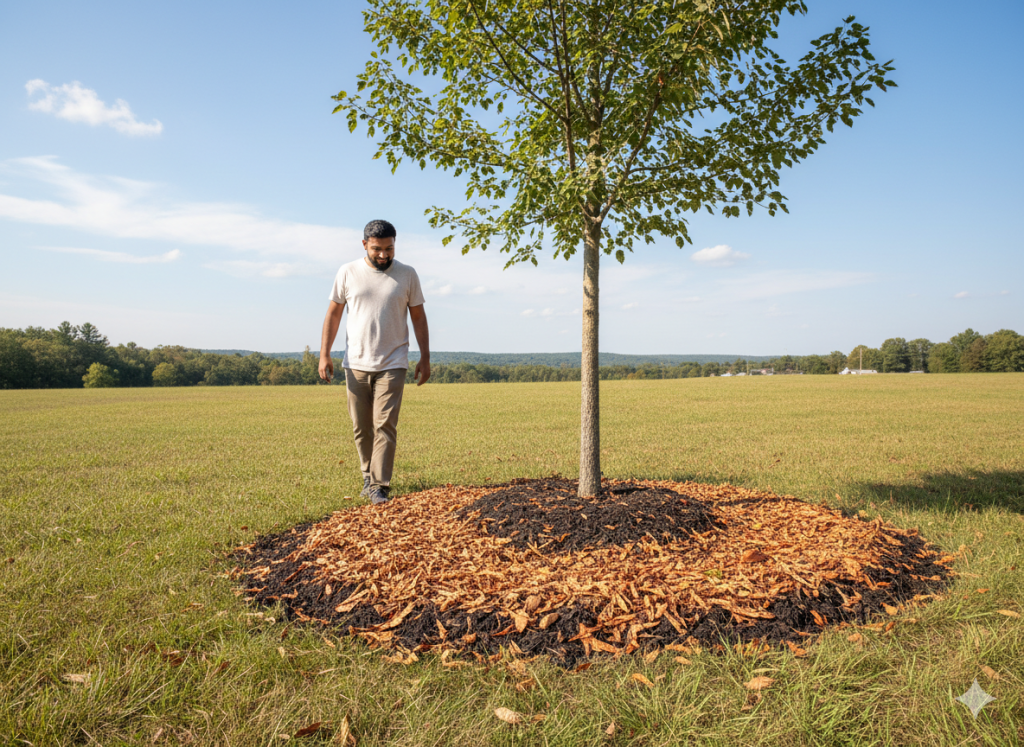
Everywhere I looked around plants, trees, and even garden beds there were dried leaves spread neatly over the soil. Not messy, not blowing onto the footpaths. Just… placed with intention. At first, I thought maybe it’s just their way of keeping the place clean and rustic.
But then a thought hit me: they have laborers maintaining the garden, so why are they letting dry leaves stay on the soil?
Curious, I walked up to a person who was pruning a shrub nearby and asked,
“Bhaiyya, why are these dried leaves placed on the soil?”
And his answer honestly blew me away.
He smiled and said, “It helps keep the soil moist. It regulates temperature, reduces weeds, and slowly becomes organic matter for the soil.”
That one sentence stuck with me. It was such a simple technique using what nature already gives and yet so powerful. And that’s what today’s blog is all about:
How organic mulch those same dry leaves, straw, or wood chips is actually one of the smartest ways to protect soil and even take a tiny step toward climate action.
So, What Is Organic Mulch, Really?
After I came back from the retreat, I couldn’t stop thinking about what that gardener said.
I had studied mulching in class before you know, those textbook definitions with diagrams and bullet points. But somehow, seeing it in action at Kanha made it click in a different way.
So here’s how I’d explain it now minus the technical jargon.
Organic mulch is basically anything natural like dried leaves, straw, or wood chips that you spread over the surface of the soil. That’s it.
No mixing. No tilling. Just a simple top layer, like a blanket for your soil.
And that “blanket” does way more than you’d think.
It:
- Keeps the soil cooler on hot days
- Locks in moisture so the water doesn’t just evaporate
- Blocks weeds from growing up through the soil
- And over time, it breaks down into organic matter, which improves soil health naturally
It’s one of those rare things in farming that’s both low effort and high impact. You’re literally just reusing what plants already drop and giving the soil a little more breathing room.
Magic Under the Surface — Why Mulching Matters
If you’ve ever tried growing a plant during peak summer, you know how quickly the soil dries up. You water it in the morning and by noon gone.
That’s where mulch quietly steps in like a hero.
At Kanha, when I saw those leaf layers on the soil, it looked so simple. But underneath, a lot was happening.
Here’s the magic:
1. It Keeps the Soil Moist
Mulch acts like a sunblock for the soil.
It covers the surface, so sunlight can’t directly hit the soil and steal away all the water. Less evaporation = less watering needed. Especially useful during hot summers or in places with water scarcity.
2. It Regulates Soil Temperature
Bare soil can heat up like crazy in summer and freeze in winter.
Mulch helps keep things stable kind of like how we use sweaters or cotton clothes to handle different seasons. Roots stay more comfortable, and plants grow better.
3. It Suppresses Weeds (Without Chemicals)
No one likes pulling weeds every week. Mulch blocks sunlight from reaching weed seeds, so they can’t grow easily.
Fewer weeds mean your crops or plants get more nutrients, light, and space.
4. It Adds Organic Matter
Over time, organic mulch breaks down slowly turning into compost right there on the spot. That’s food for earthworms, microbes, and your soil.
So you’re not just covering the soil you’re feeding it.
5. It Prevents Soil Erosion
During heavy rains or strong winds, bare soil gets washed or blown away. But when mulch is in place, it acts like armor protecting the soil from damage.
To be honest, it’s amazing how much power is packed into something as ordinary as a layer of dry leaves.
And we often ignore it just because it looks… too simple.
4. Straw or Leaves? Picking the Right Mulch for the Job
After I got back home from the retreat, I started noticing mulch everywhere farms, gardens, even some roadside tree patches.
But I also realized: not all mulch is the same.
Different types work better for different situations. It’s not about using whatever you find lying around it’s about matching the mulch to the crop, soil, and season.
Here’s what I’ve learned so far:
Straw
- Best for: Vegetable beds, especially tomatoes, brinjal, chillies, okra, etc.
- Why: It’s light, easy to spread, and breaks down slowly.
- Bonus: Keeps fruits off the muddy soil during rains. Fewer fungal issues.
- Tip: Make sure it’s weed-free. Some straw might contain seeds that sprout later.
Dried Leaves
- Best for: Orchards, perennial crops, and around ornamental plants.
- Why: Readily available (especially in autumn), breaks down gradually, and blends well with the soil.
- Bonus: Free! You’ll find them in your backyard, nearby parks, or roadside.
- Tip: Shred them if you can smaller pieces break down faster and stay in place better.
Wood Chips or Bark Mulch
- Best for: Garden pathways, around trees, or long-term no-dig beds.
- Why: Lasts longer, looks neat, and slowly enriches the soil below.
- Bonus: Great for moisture retention and weed control in permanent setups.
- Tip: Don’t use fresh chips from treated wood can be toxic or steal nitrogen from soil.
So yeah, mulch isn’t one-size-fits-all. But once you understand what works where, it’s actually super easy to add to your routine.
And the best part? You’re using natural materials that would’ve otherwise been burned, dumped, or ignored.
The Climate Twist — Why Mulching is a Mini Climate Action
When I first asked that gardener at Kanha about dried leaves, I was only thinking at the soil level moisture, weeds, temperature. But later, it hit me: this simple act of spreading organic mulch actually plays a role in something much bigger climate resilience.
Here’s how:
1. Less Water, More Efficiency
Mulched soil doesn’t dry out as quickly. That means less frequent irrigation, especially during peak summer.
In a country like India, where water is a major limiting factor in agriculture, this small saving adds up.
2. Natural Carbon Boost
When organic mulch breaks down, it adds carbon back into the soil.
This improves soil structure, boosts microbial life, and helps build long-term fertility all while locking carbon that would otherwise escape into the air.
3. Protection Against Extremes
Climate change is throwing extreme weather at farmers — sudden rains, scorching heat, dry spells.
Mulch acts as a buffer. It cushions the soil, reduces erosion, and keeps it alive even when the weather isn’t playing nice.
4. Reduces Biomass Burning
Most of the time, dry leaves or crop residues are burned because farmers don’t know what else to do with them.
But if those same materials are used as mulch?
We cut down on air pollution, reduce CO₂ release, and help the soil instead of harming the skies.
It’s kind of amazing, honestly. A layer of straw or dried leaves seems like nothing but it’s actually a small, silent climate solution happening right under our feet.
5. One Layer, Big Impact
That morning walk at Kanha Shanti Vanam really stuck with me.
I went there to learn about meditation and ended up learning something just as grounding about soil, leaves, and the quiet power of nature doing its thing when we don’t interfere.
Since then, every time I see a patch of bare, cracked soil, I can’t help but think:
“What if this had just a simple layer of mulch on top?”
It’s such a small change collecting dried leaves instead of burning them, letting straw settle over the soil instead of leaving it exposed. But the impact? Huge.
Better soil. Less water use. Fewer weeds. And even a nudge toward fighting climate change.
You don’t need expensive tools or high-tech solutions. Sometimes, the answer is literally falling from the trees.
So the next time you’re clearing your garden or walking past a pile of dry leaves, stop for a second.
Maybe, just maybe… that’s not waste.
It’s a soil-saving, moisture-locking, climate-friendly blanket waiting to be laid.
