
It started as just another late-night deep dive.
I was messing around with AI tools like ChatGPT, exploring one of my all-time favorite topics organic farming. I’ve always been fascinated by how nature can heal itself if we just step back and let it. While skimming through a few articles and research papers, one term jumped out at me like a glowing seed in the soil: “Probiotic Farming.”
Wait probiotics? Like in yogurt? But for soil?
That one word flipped a switch in my brain. I paused, went back, and started digging deeper. One search turned into five, five into fifty tabs. Before I knew it, I was neck-deep in studies about soil microbes, natural brews like Jeevamrut, and farmers turning dead dirt into living, breathing ecosystems.
And that’s when it hit me this isn’t just another buzzword. It’s a quiet revolution taking root in India’s farms.
So here I am, putting it all together the science, the stories, and why I think probiotic farming might just be the future of truly sustainable agriculture in India.
What Is Probiotic Farming?
Let’s get one thing straight: this isn’t about sprinkling flavored yogurt on your crops.
But the idea? Surprisingly similar.
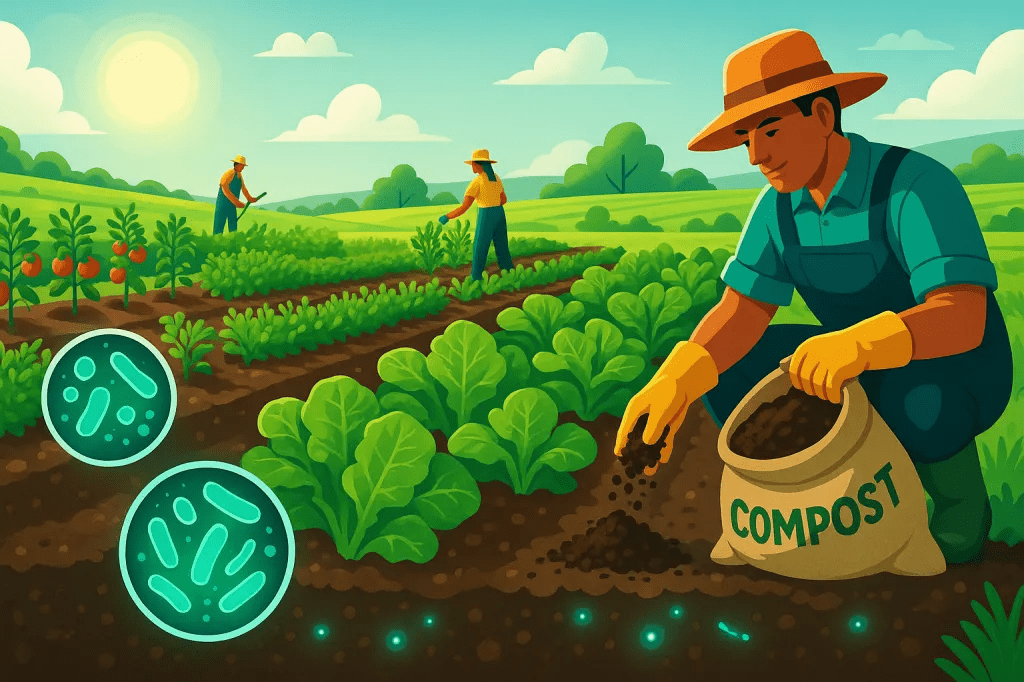
Just like our gut needs good bacteria to stay healthy, soil needs beneficial microbes to function at its best. These microbes think bacteria, fungi, and actinomycetes help plants absorb nutrients, fight off diseases, and grow strong roots. Probiotic farming is all about adding or encouraging these good microbes in the soil.
In technical terms, it involves using:
- Biofertilizers (Rhizobium, Azospirillum, Phosphobacteria)
- Compost teas
- Fermented concoctions like Jeevamrut, Beejamrut, and Panchagavya
- Fungal allies like Trichoderma and mycorrhizae
It’s like creating a supportive WhatsApp group for your plants where microbes share resources, warn each other about stress, and boost each other’s growth.
And the best part? Unlike synthetic fertilizers that often kill microbial life, probiotic farming feeds and grows it.
It’s not just farming anymore it’s soil healing.
The Indian Soil Crisis: Why We Need Probiotics in Our Fields
Here’s something that shocked me while researching: India loses nearly 5.3 billion tonnes of soil every year due to erosion.
That’s not just dust blowing in the wind that’s our future food security, literally washing away.
Decades of chemical-heavy farming have left our soils tired, acidic, and biologically broken. We’ve prioritized yields over long-term health. The result?
- Soil microbial diversity is vanishing
- Organic matter levels are critically low
- Nutrient cycles are disrupted
- Natural fertility declined
A 2022 report by the ICAR even highlighted that over 30% of Indian soils are degraded.
We’ve spent years “feeding the plant,” but forgot to feed the soil that feeds the plant. Probiotic farming flips that mindset focusing on soil life first.
How Probiotic Farming Works: Brewing Life Back into the Soil
Think of probiotic farming as crafting a living potion for your soil.
Here’s how it’s done:
Microbial Inoculation
Adding beneficial microbes like:
- Rhizobium and Azotobacter (Nitrogen fixers)
- Phosphobacteria and Frateuria (Phosphorus and potassium mobilizers)
- Trichoderma (disease control)
- Mycorrhizae (enhanced nutrient absorption)
These microbes don’t just exist they work, multiply, and build networks in the soil.
Fermented Plant Brews
Concoctions like:
- Jeevamrut – cow dung, urine, jaggery, gram flour, soil
- Beejamrut – seed treatment mix
- Panchagavya – a five-product cow-based blend
They’re packed with enzymes, microbes, and natural growth boosters.
Application Methods
- Soil drenching
- Seed coating
- Foliar sprays
This isn’t expensive. In fact, many of these are homemade and cost-effective.
Benefits for Organic Farming
Here’s why probiotic farming pairs beautifully with organic practices:
Better Nutrient Access
Microbes make locked nutrients available naturally.
Result: Plants get more nutrients, naturally and the soil stays alive and fertile
Healthier Roots and Growth
Microbes help with hormone production, root expansion, and water retention.
Result: Bigger roots, better resilience, and visibly healthier plants.
Natural Disease Resistance
Trichoderma and others act like protective armor for plant roots.
Result: Stronger immunity without chemical intervention.
Lower Input Costs
Once established, microbes reduce the need for fertilizers and pesticides dramatically.
Result: Profitability without polluting the land.
Yield Stability
Over time, soils become more productive and resilient especially for fruits, legumes, and vegetables.
Challenges and Misconceptions
It’s not all smooth sailing. Here are the common pitfalls:
It’s Not Instant
Microbial farming is slow and cumulative, unlike chemical “quick fixes.”
Quality of Products
Many biofertilizers on the market are ineffective or dead due to poor storage.
Training Is Essential
Without farmer education, even good microbes fail.
Patience Pays
It’s a long game. But the soil remembers and rewards.
The Road Ahead for India
Here’s where it gets exciting:
Traditional Wisdom, Modern Science
India has always brewed soil microbes now we’re adding scientific backing.
Final Takeaway: When We Heal the Soil, We Heal Ourselves
This journey started with a single word I found while playing with AI tools and ended in a deep respect for the life under our feet.
Probiotic farming reminded me that real sustainability doesn’t come from fancy products or foreign tech. It comes from understanding nature, working with it, and letting the microbes do their job.
In a way, learning about microbial life changed how I view farming altogether. It’s no longer just about yields or inputs. It’s about relationships between roots and microbes, farmers and ecosystems, food and our health.
