
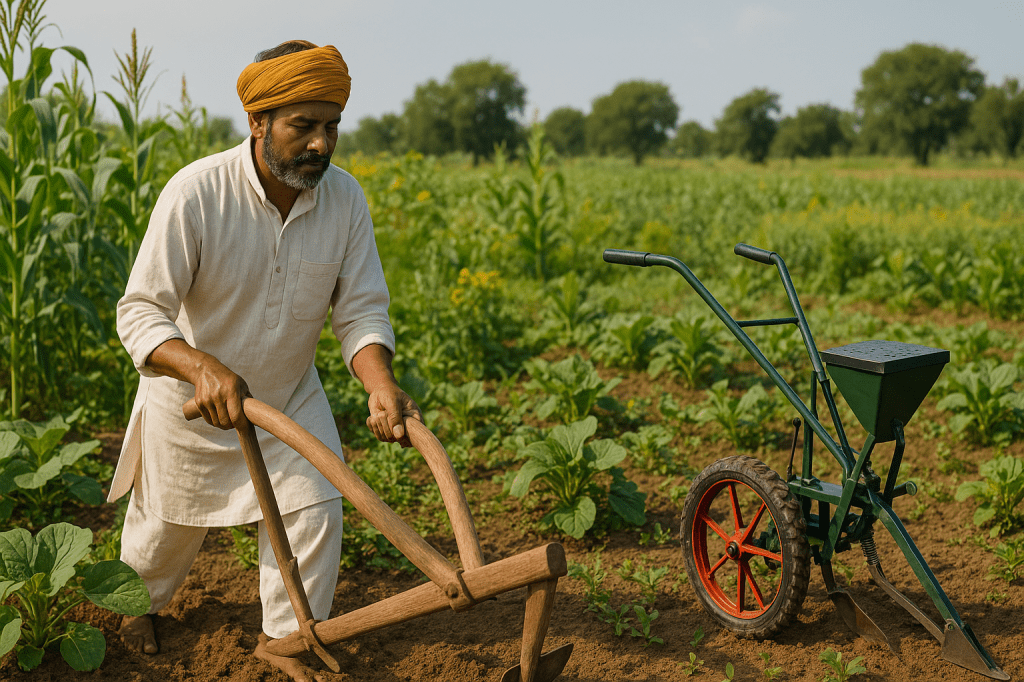
Last month, I watched a farmer sprinkle ash on his tomato plants. No fancy packaging, no NPK ratio, just plain wood ash scooped from his chulha. I asked him why.
He simply said, “Keeps the bugs away.”
So I started digging not into the soil, but into the science. Turns out, he was absolutely right. Ash contains potassium and has natural pest-repelling properties. And he’s not some lone innovator. Across India, farmers are still using techniques passed down through generations and not just for nostalgia. These Indigenous Technical Knowledge (ITK) practices still work. Even in 2025.
From seed preservation with neem leaves to cow urine sprays that double as fungicides, these traditional methods are quietly holding their ground sometimes outperforming modern agri-chemicals in both cost and climate resilience.
Here are 10 of them that are still relevant and powerful today.
1. Wood Ash as a Pesticide and Fertilizer
What it is: Ash from burnt firewood (often from cooking stoves) is sprinkled around plants.
Why it works in 2025:
- Repels soft-bodied pests like aphids and cutworms
- Rich in potassium, calcium, and trace minerals
- Slightly raises soil pH, discouraging fungal growth
In some tribal belts of Odisha and Chhattisgarh, farmers still prefer ash over chemical pest sprays and the results speak for themselves.
2. Mixed Cropping for Pest Control and Resilience
Example: Maize + Cowpea or Bajra + Moong
Why it works in 2025:
- Diversifies pest targets, reducing infestation
- Cowpea fixes nitrogen, helping the maize
- Improves yield stability during erratic monsoons
This kind of cropping pattern isn’t just sustainable it’s smart risk management. And in a climate-uncertain world, that matters more than ever.
3. Panchagavya: The Five-Cow Concoction
What it is: A fermented mix of cow dung, urine, milk, curd, and ghee
Why it works in 2025:
- Boosts soil microbes and root development
- Enhances flowering and crop resistance
- 100% natural and zero chemical load
Farmers in Tamil Nadu and parts of Maharashtra still swear by it. And field trials back them up with yield boosts of up to 20% in some cases.
4. Neem Leaves for Seed Preservation
How it’s used: Seeds are stored with neem leaves or neem powder to repel insects.
Why it works in 2025:
- Neem has natural insecticidal properties (azadirachtin)
- Prevents storage pests like bruchids or weevils
- Zero synthetic chemical use, totally organic
This is especially useful for pulses, millets, and oilseeds in rural storage conditions.
5. Sun Drying Before Storage
What it is: Spreading grains or pulses on a clean surface under the sun before storage.
Why it works in 2025:
- Reduces moisture, preventing mold/fungal growth
- Simple but critical in humid areas
- Saves money on artificial dryers
This practice continues in almost every Indian village. And honestly, it works better than many storage chemicals when done properly.
6. Zai Pits and Trench Farming
What it is: Small pits or trenches dug before sowing in dry regions
Why it works in 2025:
- Captures rainwater
- Concentrates organic matter and nutrients
- Prevents soil erosion and runoff
Used across drylands of Rajasthan and parts of Karnataka, this method turns low-rainfall plots into productive zones. In an age of groundwater depletion, this is gold.
7. Agnihotra Smoke for Grain Fumigation
What it is: Using smoke from cow dung cakes or medicinal herbs to repel storage pests.
Why it works in 2025:
- Acts as a natural fumigant
- Kills insects in stored grains without residues
- Zero infrastructure or electricity needed
Farmers store their grains in mud silos or clay pots and light a small smoke chamber every few weeks. It’s like a homegrown version of fumigatio but cheaper and safer.
8. Sowing by Nakshatra or Moon Phases
What it is: Aligning sowing or harvesting with lunar cycles or astrological calendars
Why it still works:
- Some studies suggest moon cycles affect water uptake and root elongation
- Traditional wisdom often aligns sowing with optimal soil moisture or weather shifts
- Encourages mindful observation of natural rhythms
Even if the science is mixed, the practice fosters a deeper connection with land and seasonality something industrial ag has long lost.
9. Cow Urine as a Fungicide
How it’s used: Diluted cow urine sprayed on leaves
Why it works in 2025:
- Antifungal and antibacterial action
- Boosts plant immunity
- Very low input cost
Farmers growing turmeric, ginger, and vegetables still rely on this method especially in organic clusters across Madhya Pradesh and Kerala.
10. Mulching with Banana Leaves or Crop Residue
What it is: Covering soil with leaves, straw, or crop residues
Why it works in 2025:
- Reduces evaporation = less irrigation needed
- Suppresses weeds
- Feeds soil microbes as it decomposes
It’s regenerative agriculture… but from a time before “regen ag” was even a buzzword.

Why ITK Still Matters in a Climate-Changed World
Let’s face it farming in 2025 isn’t what it used to be.
Rainfall is unpredictable. Pests are evolving faster than our chemicals. And input costs? Always rising. In this chaos, Indigenous Technical Knowledge isn’t just a cultural relic it’s a survival toolkit.
Most ITK practices are:
- Low-input: They rely on locally available materials no need for costly fertilizers or synthetic sprays.
- Low-carbon: There’s no diesel, no factory processing, no transport footprint.
- Resilient: These methods have been field-tested across generations, often in marginal, rainfed, or resource-poor systems.
- Biodiverse by default: Whether it’s mixed cropping or native seed selection, ITK often favors biodiversity and that’s key to climate adaptation.
And here’s the thing: These aren’t solutions made in air-conditioned labs. They were born in the field, shaped by centuries of close observation, trial-and-error, and ecological wisdom.
In a world chasing carbon credits and sustainability checklists, these practices are already ticking boxes quietly, effectively, and without waiting for a policy push.
My Take
We don’t need to choose between tradition and technology.
We need both working together.
In a climate-challenged world, solutions that are cheap, sustainable, and time-tested should be scaled, not sidelined.
