
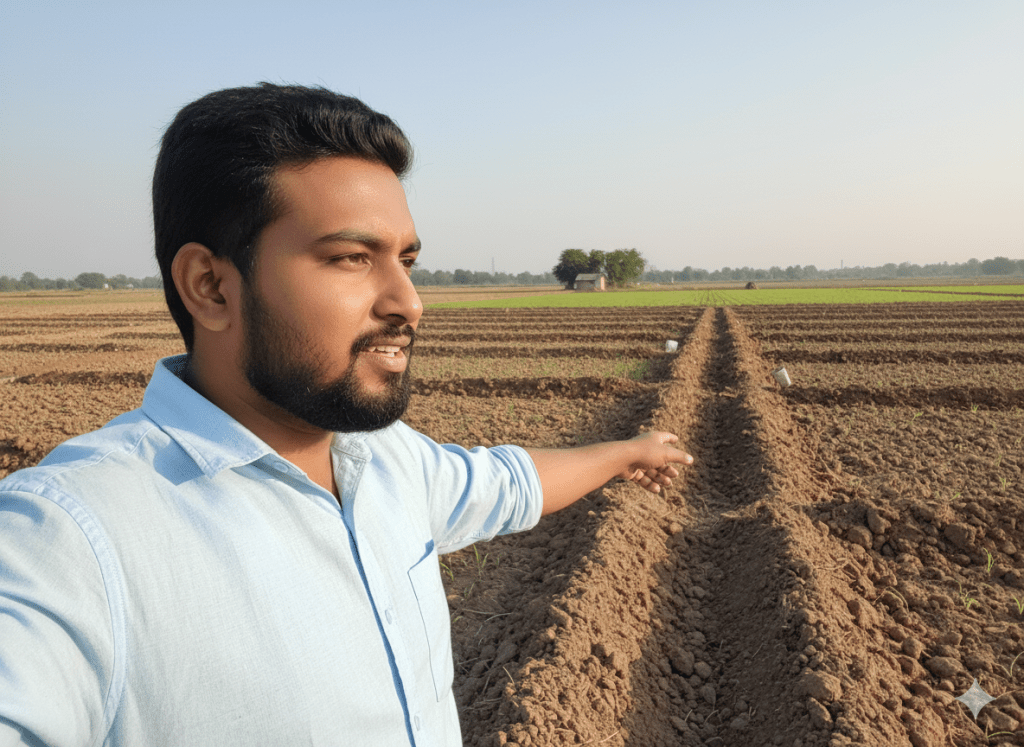
Ever noticed how a simple mud ridge at the edge of a field can decide whether crops thrive or wither? At first glance, these soil bunds look ordinary just low earthen walls drawn across slopes. But in reality, they are quiet climate warriors. Across India, bunding has been shown to reduce runoff by 40–60% and increase soil moisture storage by up to 30% compared to unbunded fields. That’s not just saving water that’s rewriting the story of resilience in a heating world.
In states like Maharashtra and Karnataka, bunding has boosted crop yields by 15–25% in rainfed farms, largely because water that would have rushed away now seeps into the ground. When climate change is bringing more intense downpours and longer dry spells, bunds act like small village-made dams capturing every drop, holding every handful of soil, and creating micro-climates where crops get a fighting chance.
Storing Every Drop
Think of rain on a bare field. Within minutes, water rushes away, carrying topsoil with it. Now imagine that same rain slowed by bunds earthen ridges acting like cupped palms holding water. Research from the Indian Council of Agricultural Research (ICAR) shows that bunded fields can cut runoff by nearly half during heavy monsoons, allowing rainwater to soak deeper into the soil profile.
This trapped moisture isn’t just numbers in a study it’s survival during dry weeks. In semi-arid regions, farmers with bunds recorded 20–30 extra days of soil moisture compared to unbunded plots. That cushion often means the difference between a crop surviving a heatwave or drying up mid-season.
Guarding Soil Like a Wall
When rain falls harder than the soil can handle, it doesn’t just wash water away it strips the land of its fertile topsoil, the very skin of agriculture. Studies in central India have shown that unprotected fields can lose 10–15 tonnes of soil per hectare per year under heavy rainfall. That’s years of fertility gone in a single monsoon.
Bunds slow down that destructive rush. By reducing runoff velocity, they help soil particles settle back instead of being swept away. Trials in Karnataka and Madhya Pradesh found that bunding reduced soil loss by up to 70% compared to open slopes. In a climate where rainfall is becoming more erratic and intense, these earthen walls stand as the first line of defense low-cost barriers against a high-cost problem.
Micro-Climate Makers
Bunds do more than save water and soil they quietly reshape the climate within a field. By holding moisture longer, bunded plots keep root zones cooler during scorching spells. A study in semi-arid Andhra Pradesh recorded that fields with bunding had soil temperatures 2–3°C lower than neighboring unbunded fields at peak summer. That small drop is often enough to reduce crop stress and prevent yield loss.
Moisture also acts like a hidden reservoir. During dry spells, bunded fields supplied crops with 20–25% more available water, helping them withstand heatwaves that are becoming more frequent with climate change. Farmers often notice that even when surrounding lands turn brown, bunded patches stay visibly greener a living proof that these ridges don’t just shape land, they engineer resilience.
Why Bunds Matter in a Warming World
In a changing climate, the humble bund is not just a farm tool it’s a resilience strategy. Here’s why:
Water security: Bunds can store 20–30% more rainwater in soils, reducing crop failure in dry spells.
Soil protection: They cut erosion losses by up to 70%, keeping nutrients where they belong in the field.
Yield resilience: Rainfed crops in bunded plots have shown 15–25% higher productivity, even under erratic rains.
Low-cost solution: Built with local soil and labor, bunds need no expensive technology.
Community strength: Villages practicing bunding collectively see better groundwater recharge and shared benefits.
The Soft Strength of Soil Walls
Climate change often feels overwhelming, like a storm too big to face. But sometimes, resilience is built with the simplest lines of mud drawn across a slope. Bunds don’t demand satellites, sensors, or machines just community hands and local soil. Yet their impact echoes loudly: greener fields, cooler soils, and food security in uncertain seasons.
The next time rain falls on a village field, maybe the most powerful climate defense won’t be in a lab or a policy, but in the silent strength of a bund holding the earth together.
