
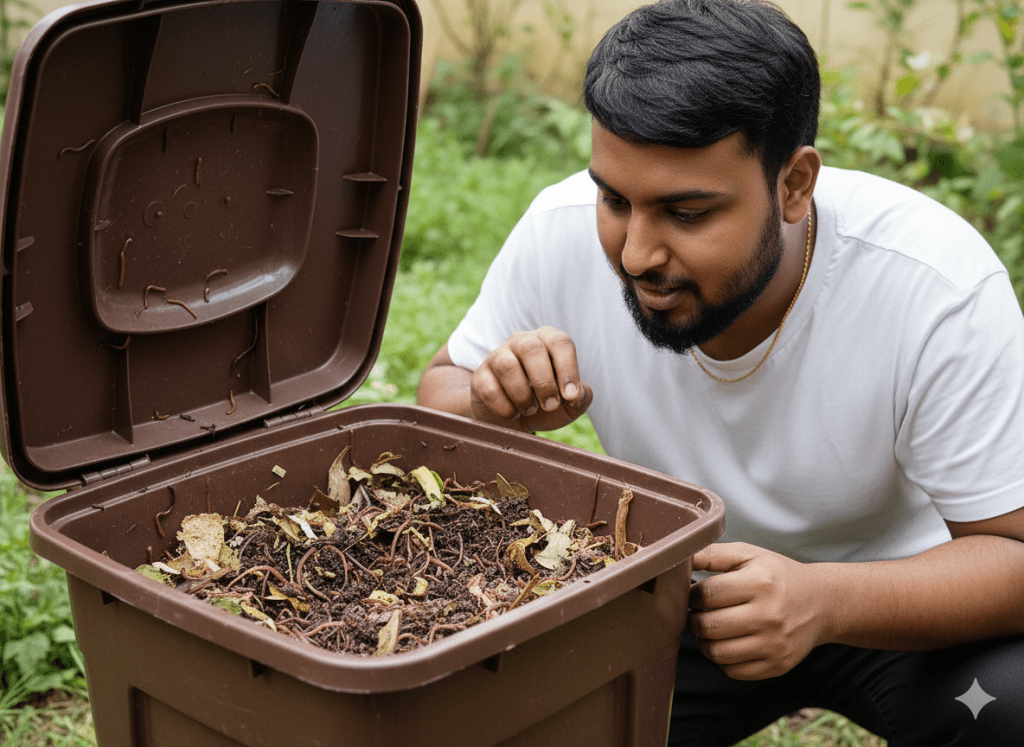
Vermicomposting explained: how earthworms recycle waste, reduce methane, and turn soil into a powerful climate ally.
Ever noticed how a tiny earthworm wriggling in the soil might be doing more for the climate than most machines? Hidden beneath our feet, these quiet creatures are recycling waste, building soil, and even helping us fight global warming.
The Day Worms Made Me Wonder About the Planet
One day, I went with a friend to the vermicompost unit in our college to shoot a reel for his page. We spent a few minutes deciding the angles and shots. Curious, I asked him, “What will you say in the reel?” He smiled and replied, “Bhai, I’ll cover the basics types of beds, separators, investment, tools, and materials needed for vermicomposting.”
We wrapped up the shoot, and the final reel turned out amazing we were both happy as we walked back to class. But while he was celebrating the video, my mind was buzzing with questions: Does vermicomposting really improve soil health? How does it fit into the nutrient cycle? Can it reduce fertilizer use? Does it help store carbon? And most of all what role does it play in climate change?
That curiosity didn’t let me rest. I started digging deeper, and this blog is where those questions finally meet their answers.
The Basics of Vermicomposting
At its heart, vermicomposting is just teamwork between organic waste and earthworms. You take things we usually throw away vegetable peels, crop residues, dried leaves, even farmyard manure and place them in a structured pit or bed. Then come the stars of the process: earthworms like Eisenia fetida (red wigglers).
Here’s what happens:
- Shredding & Eating – Worms pull in bits of waste, grind it with their tiny muscular gizzards, and start digesting it.
- Digestion & Transformation – Inside their bodies, microbes and enzymes break the waste down further.
- Casting – What comes out the other end is not “waste” at all but vermicast a dark, crumbly, nutrient-rich compost.
In about 45–60 days, a pile of organic matter that would have rotted into smelly garbage turns into soft, earthy compost full of nitrogen, phosphorus, potassium, and beneficial microbes. Farmers often call it “black gold” because it improves soil texture, boosts water retention, and feeds plants naturally.
The Climate Impact in Simple Stats
- Less Methane – When we let waste rot in landfills, it releases methane, a powerful greenhouse gas. Vermicomposting can cut this by almost one-third compared to normal composting.
- Lower Climate Footprint – If we compare emissions, vermicomposting releases less than half the greenhouse gases that traditional composting does.
- Fewer Fertilizer Emissions – Chemical fertilizers release nitrous oxide, a gas nearly 300 times stronger than CO₂. By reducing fertilizer needs, vermicomposting lowers these emissions by up to 40%.
Can Earthworms Really Help Tackle Climate Change?
From Waste to Soil Wealth
When organic waste ends up in landfills, it decomposes without oxygen and produces methane, a greenhouse gas nearly 30 times more potent than carbon dioxide. Vermicomposting prevents that by letting earthworms transform waste into vermicast, a stable, nutrient-rich soil amendment. Less methane, better soil two wins in one.
Cutting Fertilizer Dependence
Chemical fertilizers, especially nitrogen-heavy ones like urea, are a major source of nitrous oxide (N₂O) emissions almost 300 times stronger than CO₂. Vermicompost reduces the need for such inputs by naturally supplying balanced nutrients and enhancing soil fertility. Healthier soils mean plants absorb nutrients more efficiently, reducing emissions and runoff.
Storing Carbon in the Soil
Vermicompost is rich in stable organic carbon. Instead of carbon escaping into the atmosphere, it gets locked into the soil as humus. This not only turns soil into a carbon sink but also improves water retention and resilience against drought helping farms adapt to a changing climate.
Why This Matters
- Vermicomposting turns waste into a natural fertilizer instead of harmful greenhouse gases.
- It reduces the need for chemical fertilizers, cutting nitrous oxide emissions (a super-powerful greenhouse gas).
- Healthy soils built with vermicompost store more carbon and hold more water.
- Simple, low-cost, and doable at home or on farms making it a climate-smart solution for everyone.
A Few Last Words
The next time you spot an earthworm wriggling in the soil, pause for a moment. Beneath that tiny, unassuming body lies a quiet worker recycling our waste, healing our soils, and even helping fight climate change. Sometimes, the biggest climate heroes aren’t loud or shiny. They’re silent, hidden in the soil, reminding us that solutions can be as humble as a worm and as close as our own backyard.
