

A few days ago, I was watching a startup pitch show where a young student presented a climate-resilient agri-startup. It wasn’t some high-tech, buzzword-heavy thin it was simple, smart, and rooted in solving real problems for farmers. That moment made me pause.
Since then, I’ve seen YouTube videos of students composting on balconies, growing food in small spaces, and talking about soil health like it’s a superpower. And it got me thinking…
Even I’m part of Gen Z.
Can our generation really help heal the planet especially through farming?
This blog is my attempt to unpack that question. Let’s explore the tools we can use, the business models we can create, the regenerative values we can hold on to and the barriers we still need to overcome.
Stick around till the end this one’s gonna be interesting.
The Tools We Can Use: Not Just Cool, But Climate-Smart
Let’s face it we grew up on screens. But we can use that tech not just for scrolling, but for soil.
Here’s how Gen Z can bring climate-smart innovation into farming:
- IoT sensors to monitor soil moisture, temperature, and pH
- Drones to map, monitor, and spray precisely
- Climate apps to time our sowing based on rainfall trends
- AI/ML tools to forecast pests or optimize irrigation
- Open-source farm data shared via social media, forums, and podcasts
We can blend tech with nature not to dominate it, but to work with it.
Business Models We Can Build: Ethical, Circular & Transparent
Gen Z doesn’t just want profit we want purpose. And agriculture gives us the space to reimagine how businesses operate:
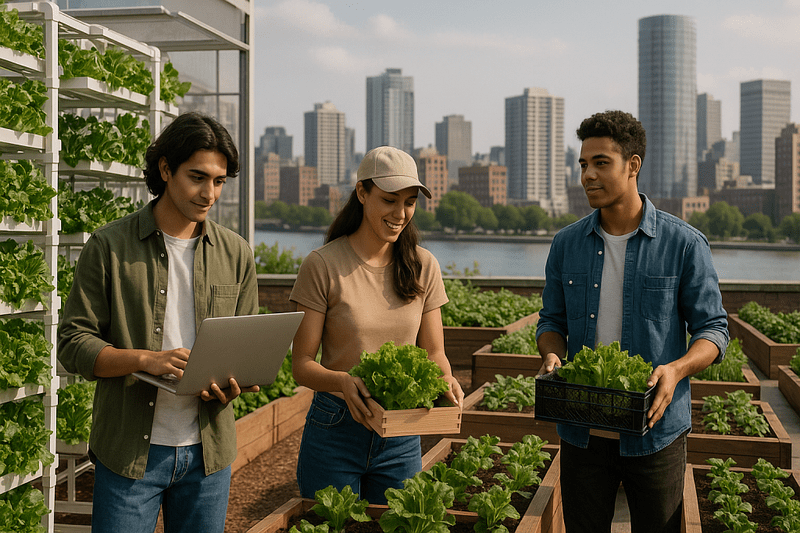
- Urban farms on terraces and balconies
- Farm-to-table subscriptions that build trust with consumers
- QR-coded produce showing where your spinach came from
- Zero-waste food brands that reuse farm leftovers
- Community-supported agriculture (CSA) models that share risk and reward
Why These Models Matter
We can rebuild food systems that are:
- Fair to farmers
- Clear to consumers
- Sustainable for the environment
- And meaningful for the people running them
Values We Can Embrace: Farming That Heals, Not Harms
We don’t have to farm like the past. We can farm like the future depends on it because it does.
- Natural and organic methods that protect soil and biodiversity
- Indigenous seed saving that strengthens local resilience
- Agroforestry and crop diversity for long-term health
- Balcony composting that turns waste into gold
- Carbon farming to store emissions in the soil
It’s not just about growing food. It’s about restoring ecosystems.
What Makes Gen Z Different And What We Can Bring
We’ve grown up watching the climate crisis unfold. But we’re not frozen we’re fired up.
Here’s what we bring to the table:
- We’re connected to global ideas from YouTube to Reddit
- We’re comfortable with experimentation over tradition
- We’re open to collaboration, not competition
- We can learn faster, adapt better, and think beyond borders
- And most of all we care.
We can farm with empathy, equity, and innovation.
The Challenges We’ll Have to Face
Of course, the road ahead isn’t easy. If we want to transform farming:
- Land access many of us don’t own land
- Capital barriers sustainable models need early support
- Skepticism traditional systems may resist change
- Climate anxiety a heavy emotional burden
Why This Matters
This isn’t just about us. It’s about the world we’re inheriting and the one we can help shape.
If Gen Z steps into farming, we can:
- Localize food systems and cut carbon footprints
- Use tech to increase yield with less harm
- Rebuild soil health and capture carbon
- Strengthen food justice by making access more fair
- And most importantly? We can bring hope back to the fields.
Final Reflection
Maybe we won’t all become farmers. But we can compost, invest in sustainable food, support local growers, or build agri-tech that matters.
We can learn from the past.
We can experiment with the future.
And we can plant something today that might just save tomorrow.
