
In recent years, farming has landed on the frontlines of climate chaos. Heatwaves scorch fields. Droughts empty wells. And when the skies finally open, it’s often a deluge washing away topsoil, and with it, the hopes of farmers. These aren’t one-off events anymore. They’re patterns.
Industrial agriculture once hailed as the path to food security is showing cracks. It’s input-heavy, dependent on chemical fertilizers and pesticides, and obsessed with short-term yields. The fallout? Depleted soils, declining pollinators, and disappearing biodiversity.
But amid this breakdown, an older, quieter approach is resurfacing. One that predates tractors and urea bags.
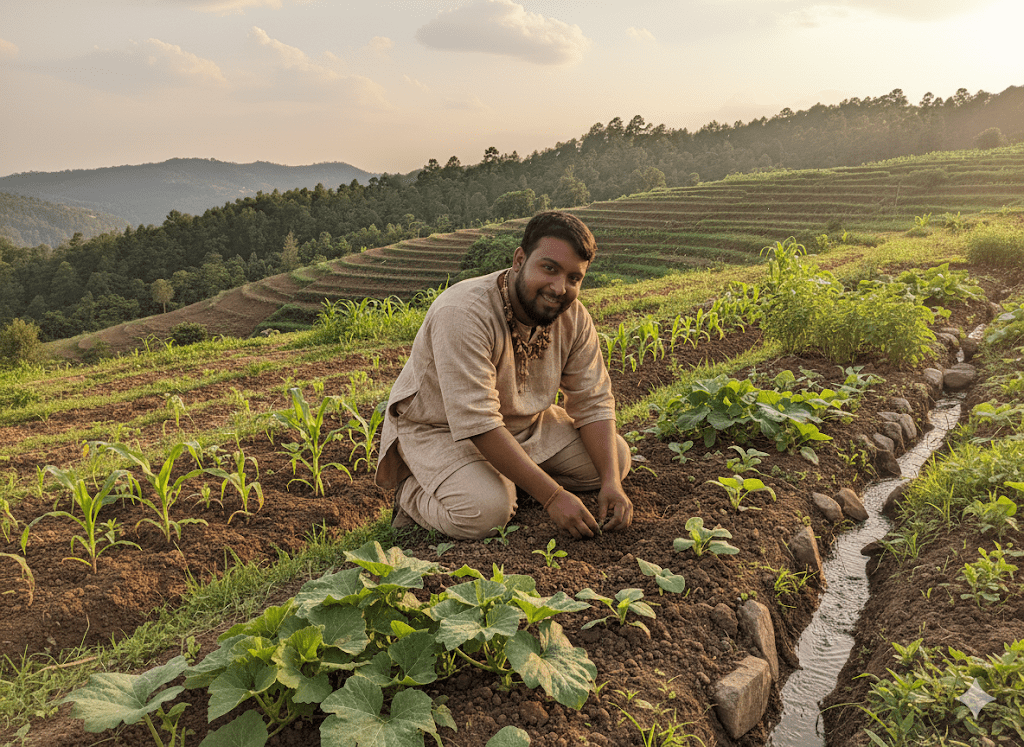
Indigenous farming systems shaped by centuries of observation and adaptation often rely less on external inputs and more on ecological wisdom. And they may just hold keys to resilience in a climate-uncertain future.
What Do We Mean by Indigenous Farming?
It isn’t a single “method.” It’s a way of life a community’s evolving relationship with land, water, and biodiversity.
At its core, indigenous farming is:
- Locally adapted knowledge passed down through generations
- Community-centered, rooted in collective labor and sharing
- Ecologically grounded, guided by natural cues and seasonal rhythms
Some common practices include:
- Mixed and intercropping: planting crops together for pest resistance and soil balance
- Natural pest control: neem, ash, garlic, or cow urine instead of synthetic sprays
- Heirloom seeds: native varieties tuned to local climates
- Traditional irrigation: tanks, kunds, bunds, and water-harvesting systems
- Seasonal calendars: planting guided by lunar cycles or local festivals
India’s Living Examples
Across India, indigenous systems still quietly thrive:
- Zabo system (Nagaland): integrates forest, water, crops, and livestock into a circular economy.
- Bamboo drip irrigation (Meghalaya): channels mountain streams through bamboo pipes zero pumps, zero waste.
- Baranaja (Uttarakhand): over 12 grains, legumes, and vegetables grown together a living safety net for food and nutrition.
- Kuruvai-kilavazhi (Tamil Nadu): a double-cropping system that keeps rice harvests steady, even under water stress.
These aren’t museum pieces. They’re blueprints for the future.
Why This Wisdom Still Works
Here’s the beauty: long before the term “climate-smart agriculture” existed, indigenous practices were already climate-smart.
- Polycultures build resilience. If one crop fails, another survives.
- Soil and water thrive. Mulching, cover crops, and bunds hold moisture and protect fertility.
- Farmers rely less on markets. Local seeds and practices mean less dependence on costly inputs.
- Biodiversity is preserved. Native varieties act as genetic insurance against unpredictable weather.
According to the FAO, traditional knowledge systems are critical for climate adaptation especially for smallholders, who form the backbone of Indian agriculture.
Blending Old and New
Reviving indigenous farming doesn’t mean rejecting modern science. It means rebalancing weaving tradition and technology together.
Some steps forward:
- Document and digitize local wisdom, with communities leading the process
- Promote farmer–scientist partnerships, so knowledge flows both ways
- Support agroecology through policy, not just chemical subsidies
- Build seed banks of native varieties, alongside modern hybrids
- Reimagine agri-education, teaching both AI-driven precision tools and lunar sowing calendars
The future farmer should be fluent in both satellites and soil songs.
Closing Reflection
In our rush to modernize, we’ve overlooked a powerful truth: some answers are already rooted in the land.
Indigenous farming isn’t a step backward. It’s a step towards balance, resilience, and respect for ecosystems we can’t live without.
If climate change is the exam, maybe traditional knowledge is the answer we forgot to carry into the test hall.
