
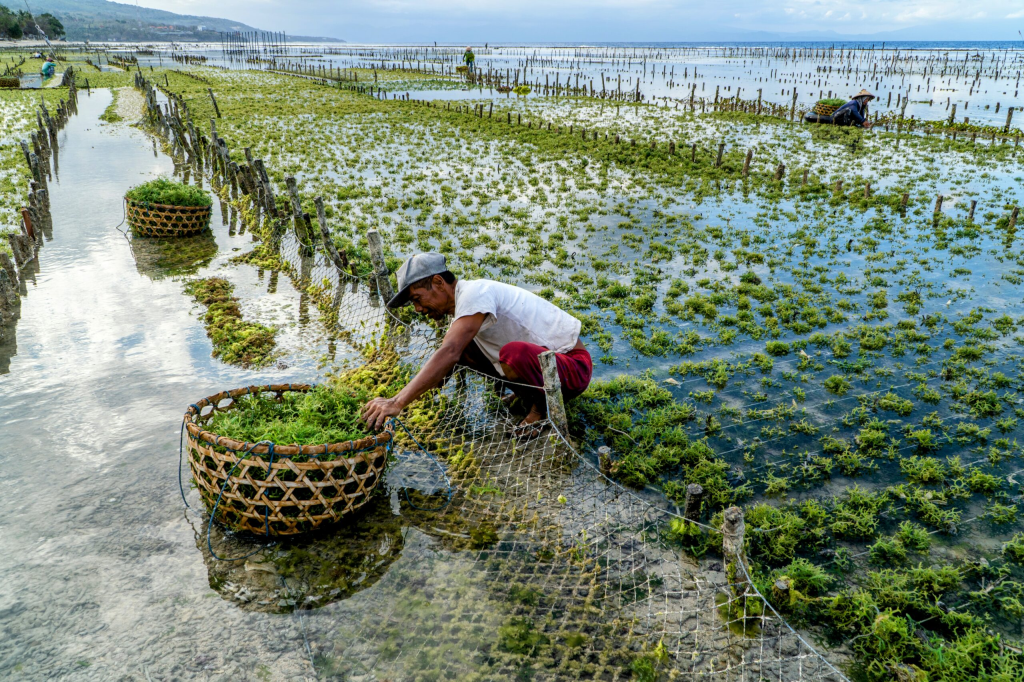
In India, we don’t often think of seaweed beyond the beach but as an agriculture student, I see it as both a superfood and a climate-smart farming opportunity. It’s one of those rare resources that nourishes people, heals ecosystems, and creates livelihoods all at once.
What’s So Great About Seaweed?
Seaweed is basically nutrition wrapped in ocean waves. It’s rich in iodine for thyroid health, packed with vitamins A, C, and K, and even offers protein and fiber. That’s why it’s a staple in diets across Asia, from miso soups in Japan to coastal delicacies in Korea.
But seaweed isn’t just about your plate. It’s also a quiet climate hero. By absorbing carbon dioxide, it helps reduce ocean acidification and acts like a natural carbon sink turning coastal waters into allies in the fight against climate change.
Seaweed Farming: The Future of Sustainability
Unlike land crops, seaweed doesn’t need fresh water, fertilizers, or pesticides. It thrives on sunlight and nutrients already present in the ocean. Seaweed farms also provide shelter for fish and marine life, adding a biodiversity boost.
In fact, India’s coastal states are now exploring seaweed farming as a source of income for fishing and farming communities. Unlike paddy or wheat, it doesn’t compete for land or irrigation. It’s a low-input, high-value crop exactly the kind of climate-smart solution coastal farmers need.
The Downside?
Of course, no solution is perfect. Overharvesting or farming irresponsibly can disturb marine ecosystems. And because seaweed absorbs everything around it, farming in polluted waters risks contamination. Like any resource, success depends on farming it wisely and sustainably.
Conclusion
For India, seaweed could mean more than just nutrition it could be part of a future where coastal farmers fight climate change while securing their livelihoods. Imagine a coastline where fishing nets are joined by seaweed farms, feeding people and absorbing carbon at the same time.
The challenge is ensuring we grow it responsibly. Should India invest big in seaweed farming as both food and climate action or will we let this ocean hero stay overlooked?
