
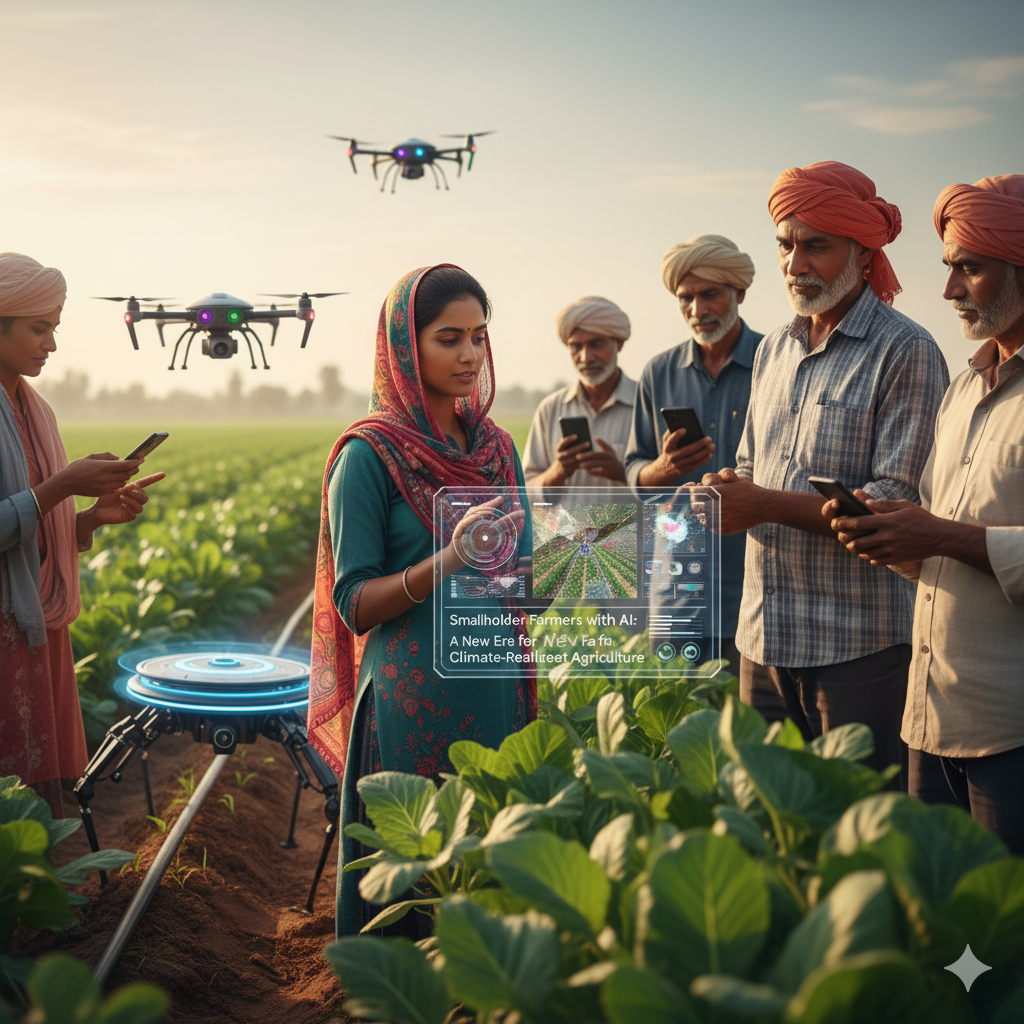
I was scrolling through my phone one evening when I stumbled upon a short clip: a farmer in Maharashtra explaining how an AI-powered weather advisory had saved his cotton crop from unseasonal rains. It struck me the same technology that drives global industries is now guiding decisions in small village fields. For farmers standing at the frontline of climate change, AI might just be the game-changer they’ve been waiting for.
The Climate Pressure on Small Farmers
Smallholder farmers feed a large part of the world, but climate change is testing their resilience like never before. In India and across sub-Saharan Africa, farming is mostly rain-fed. That means delayed monsoons, prolonged droughts, or sudden floods don’t just ruin crops they threaten food security for millions.
Studies suggest India’s rice and wheat yields could drop by 6–10% in the coming decades. For a farmer managing just two acres, that’s the difference between breaking even and falling into debt. The margin for error is vanishing fast.
How AI Is Changing the Field
Smarter Weather Predictions
Traditional forecasts are too broad to help a farmer decide whether to sow today or wait a week. AI-enhanced models, however, offer hyper-local forecasts. In Andhra Pradesh, a state-level digital advisory program is already delivering daily SMS-based AI weather updates to farmers. ICAR pilots have shown that these advisories can reduce yield losses by up to 20% during unseasonal rains.
Precision Inputs
By combining satellite images, soil data, and on-ground sensors, AI can calculate the exact amount of water, fertilizer, or pesticide needed for a plot. This precision not only cuts costs but also conserves water critical in drought-prone regions.
Early Warnings
AI can scan massive datasets to flag early signs of pest outbreaks or plant diseases. Farmers who act on these alerts intervene early, protecting crops and reducing heavy dependence on chemical pesticides.
Barriers on the Ground
For all its potential, AI adoption in farming faces hurdles.
- Access Gap: Many smallholders still lack smartphones, steady internet, or reliable electricity.
- Knowledge Gap: Digital literacy remains low, making it difficult for farmers to interpret or trust AI recommendations.
- Data Gap: AI thrives on data, but in rural areas, soil records, weather histories, and yield data are patchy or missing.
- Cost Barrier: Even affordable AI tools can feel expensive to farmers working on thin margins.
Bridging the Divide: Making AI Work for Everyone
The solution lies in inclusive design and collective effort.
- Public–Private Partnerships: Governments and companies can co-create AI tools tailored to local crops and conditions. Subsidies and bundled services can make these tools accessible to smallholders.
- Training Farmers: Capacity-building programs can teach farmers not just how to use AI apps, but how to act on the insights they provide.
- Infrastructure Investment: Expanding rural internet connectivity, ensuring steady electricity, and building local datasets are crucial for AI to deliver accurate, useful results.
Conclusion: Toward Smarter, Resilient Farming
The future of smallholder farming will depend on how quickly farmers can adapt to a hotter, more unpredictable climate. AI isn’t a silver bullet, but it is a powerful ally. With the right support, it can help farmers make smarter decisions, cut risks, and sustain yields even when the climate plays unfair.
Soil, water, and seeds remain the foundation of farming. But if we add AI as a new tool in the kit designed inclusively, deployed widely, and trusted locally we can give farmers not just survival, but resilience.
Because in the end, climate-smart farming won’t be built in labs alone. It will be written in the daily choices of farmers guided by tools that put intelligence in their hands.
